
Guide / build versus buy
Laravel inventory management systems on GitHub
Laravel is the most natural framework in which to build an inventory system, and GitHub has the projects to prove it — from CRUD starters to genuinely capable open-source apps. The honest question is not the code; it is who owns the system at year three.
The key facts
- What you get: Laravel's discipline — migrations, Eloquent models, validation, queues — applied to products, stock movements and orders; the good repos are worth studying whatever you decide.
- What most repos lack: the business layer — concurrency, guardrails, audit trails, batch trace, accounting handoff.
- The ownership question: hosting, patching, backups and every future feature are yours from the moment you clone.
- BSimple's angle: buy the record, keep the building — the REST API is the supported way to run custom Laravel work on top of a truthful record.
- The wider system: inventory management end to end maps the whole record this page sits in.
- 01The key facts
- 02What the Laravel projects actually give you
- 03What you take on when the business system is a repository
- 04The alternative: build on top of a bought record
What the Laravel projects actually give you
Laravel suits inventory work: Eloquent models map naturally to products, locations and movements; migrations give the schema history; form validation catches bad data at the door; queues handle the jobs (notifications, reports) that would otherwise block a request. The better repositories on GitHub demonstrate real patterns — stock movement ledgers rather than mutating quantity fields, database transactions around deductions, policy-based permissions. As a study set or a prototype, they are genuinely valuable, and Laravel-specific admin tooling makes a respectable internal UI fast.
What separates a demo from a business system is the part nobody can download: concurrency (two pickers, one unit), guardrails (negative inventory, approval before commitment), traceability (batches, expiry, audit trail), and the handoffs (accounting, portals, ecommerce). Those are processes and discipline encoded in code — the reason the search for a ready-made system exists at all.
What you take on when the business system is a repository
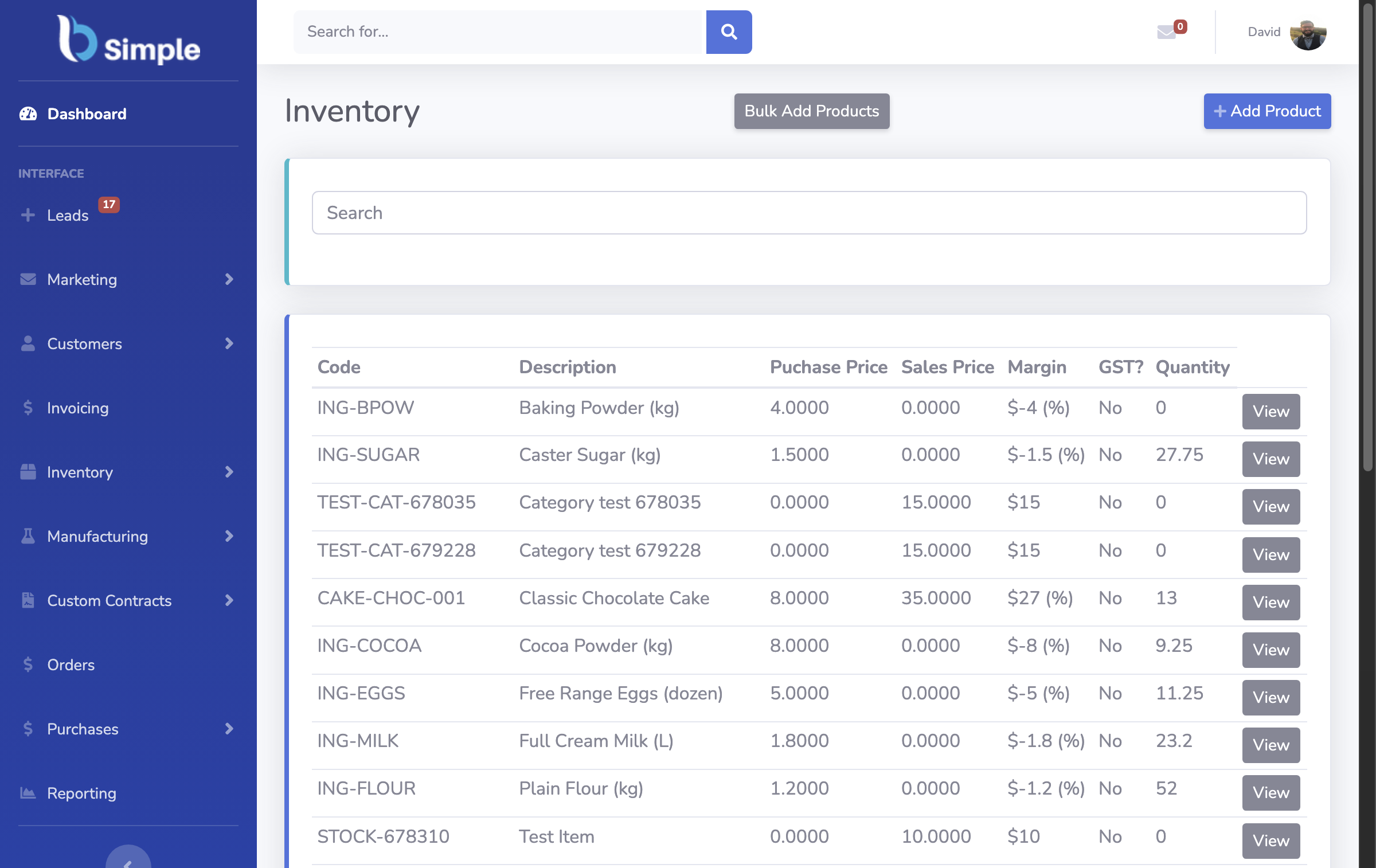
Cloning moves the cost; it does not remove it. You become the maintainer (PHP and Laravel version churn, dependency patches, security releases), the host (a server with tested backups), the auditor (when quantities drift, there is no support line — just your logs), and the integrator (accounting export, scanners, customer access — all custom). The commit history of the repo you cloned is the vendor's last commitment; everything after is your team's roadmap whether they chose it or not.
This is not an argument against building. It is an argument for building deliberately: a named maintainer, a patch routine, and a list of the workflows that genuinely require custom code. If that list is short, the build is probably a reaction to a bad demo, not a real requirement — the PHP-on-GitHub picture and the MERN equivalent show the same pattern in every stack.
The alternative: build on top of a bought record
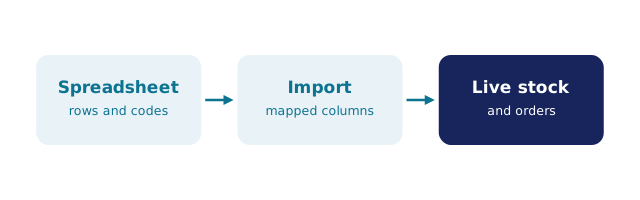
The middle path for a team that likes Laravel: buy the operational record and build the custom layer against it. BSimple is cloud operations software for wholesale, manufacturing and distribution — live quantities across locations, purchasing from demand, batch tracking, order-to-invoice, customer portals — from $180/month AUD with everything in the core plans. Where your business needs custom software, the public REST API exposes read projections of stock, orders, purchasing and more with API keys and scopes, and an MCP endpoint lets AI assistants query the same record. Your Laravel app stays thin, current and replaceable; the record stays truthful no matter what you build on it.
The deciding test: write the two workflows that make you want to build. If they are "track stock and stop overselling", that problem is solved — start the trial instead of a clone. If they are genuinely novel, build — on top.
Frequently Asked Questions
Are Laravel inventory systems on GitHub production-ready?
A few are close for simple cases; most are demos or course projects. Production readiness means concurrency, guardrails, audit trails and someone accountable when they fail — check the repo for all four before trusting it with a trading day.
Is Laravel a good framework for inventory software?
Yes — the framework fits the domain: transactional data, validation-heavy input, queued jobs. The framework was never the risk; unowned operations are. Choose it for software you intend to maintain, not to escape maintaining.
Can our Laravel app talk to BSimple?
Yes — the REST API exposes read projections (stock, orders, purchasing, suppliers, locations) with scoped API keys, so an Eloquent-backed front end can build on the record without becoming responsible for it.
What does self-hosting actually cost?
A server plus the hours: patching, backups (tested restores, not intentions), monitoring and every feature request. For most teams it is a part-time job with on-call instincts — price it honestly against $180/month.
When should we build versus buy?
Build when the workflows are genuinely novel and central to what you sell; buy when they are the common ones the market already solved. The trial is an afternoon; a clone is a relationship.

BSimple