Inventory Management System Github Mern for Manufacturing

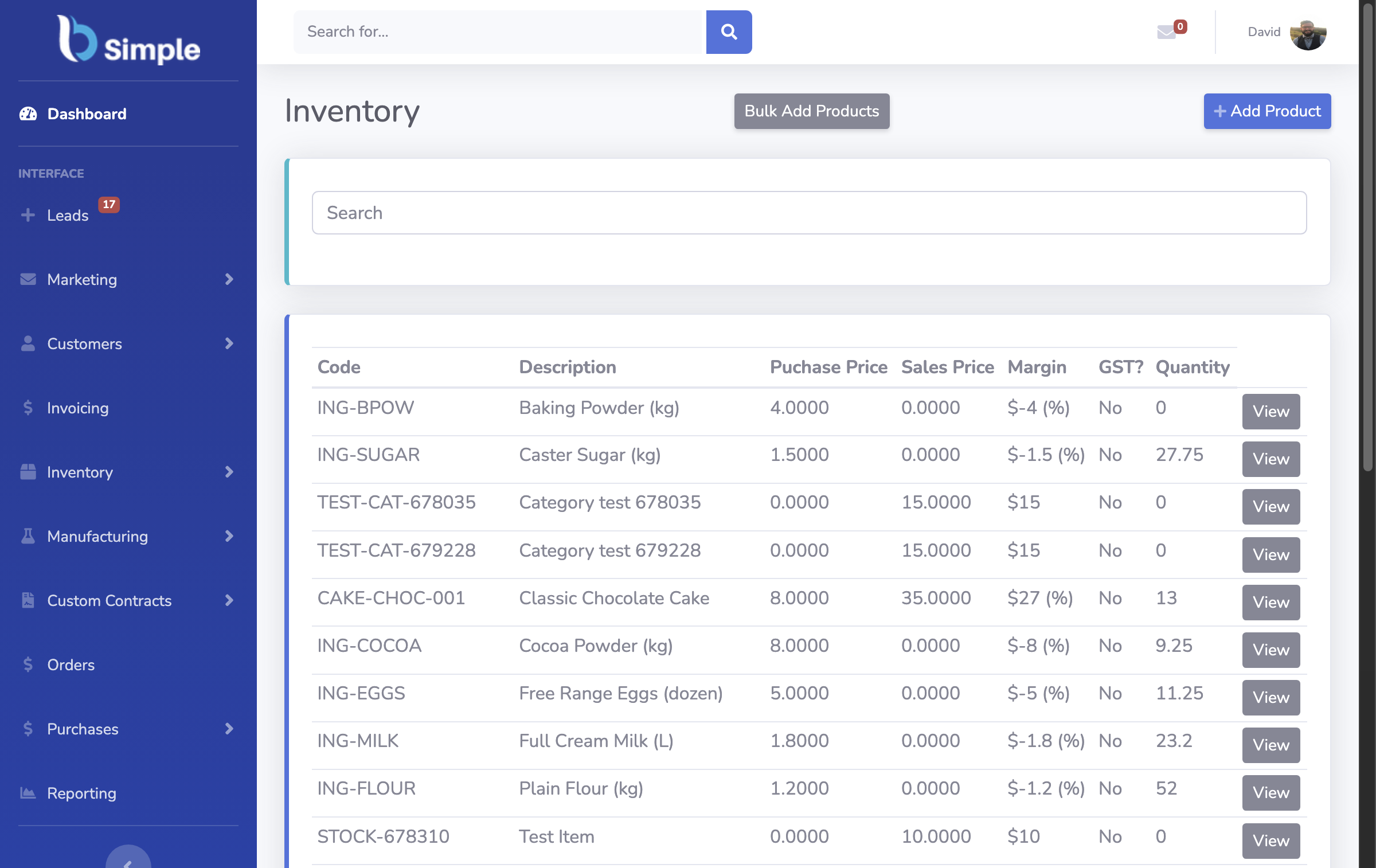
  • Real-time stock level tracking across multiple warehouses with instant visibility and automated alerts
  • Automated purchase order generation when inventory falls below customisable reorder points and thresholds
  • Seamless Xero integration for financial reconciliation, GST compliance, and EOFY stocktake management
  • Negative inventory tracking for backorder management and customer allocation workflows
  • Multi-location warehouse management with inter-warehouse transfer capabilities and allocation logic
  • Mobile-responsive React interface for shop-floor inventory updates using tablets and barcode scanning
  • Customisable reporting dashboards showing inventory metrics, supplier performance, and stock turnover analysis

Building an inventory management system github mern stack solution offers Australian manufacturers and wholesalers a powerful, cost-effective alternative to enterprise software—see also our Inventory Management Software for the full picture on how modern cloud systems work. The MERN stack (MongoDB, Express, React, Node.js) has become increasingly popular for developing custom inventory solutions because it’s flexible, scalable, and allows businesses to tailor systems to their exact needs. For Australian SMBs managing complex stock across multiple warehouses or production facilities, understanding how MERN-based inventory systems work can be eye-opening. These open-source frameworks give you the ability to build lightweight applications without the hefty licensing costs of traditional enterprise resource planning (ERP) systems. Whether you’re a Sydney coffee roaster tracking bean inventory across multiple locations or a Melbourne brewery managing grain stocks and fermentation schedules, MERN stack solutions offer genuine flexibility. The real advantage isn’t just the technology itself—it’s the ability to integrate with existing tools like Xero, automate purchase orders, and maintain real-time visibility across your entire supply chain. Many Australian distributors are discovering that custom MERN applications can actually be more responsive to their specific workflows than off-the-shelf enterprise solutions.

Why Australian Manufacturers Choose MERN-Based Solutions

When you’re evaluating inventory management system github mern options, it’s crucial to understand what makes these solutions different from traditional software packages. The MERN stack architecture separates frontend (React), backend (Node.js/Express), and database (MongoDB) layers, meaning each component can be developed, updated, and scaled independently. This modularity is particularly valuable for Australian manufacturing businesses that need to adapt quickly to changing market conditions or seasonal demand fluctuations. A typical MERN-based inventory system allows you to track stock levels in real-time, generate automated purchase orders when inventory falls below thresholds, and maintain detailed audit trails for compliance purposes. For wholesalers and distributors, this means you can implement just-in-time inventory practices without the risk of stockouts—critical for businesses operating on tight margins. The open-source nature of MERN components means you’re not locked into vendor-specific features or upgrade cycles. You can access thousands of pre-built libraries and community solutions on GitHub that solve common inventory challenges: barcode scanning integration, multi-warehouse management, negative inventory tracking for backorders, and automated stocktake workflows. Many Australian businesses appreciate that MERN solutions can be hosted on affordable cloud infrastructure, eliminating expensive on-premise server requirements. The flexibility also extends to reporting—you can build custom dashboards that show exactly the metrics your business cares about, whether that’s days-on-hand inventory, stock turnover rates, or supplier performance analytics.

Real-World MERN Implementation for Wholesale Operations

Understanding the core features of an inventory management system github mern requires looking at real-world implementation scenarios. Consider a Melbourne-based distribution company managing SKUs across three warehouses—they need instant visibility into stock levels, the ability to allocate inventory to customer orders, and seamless integration with their accounting system. A MERN-based solution can provide all this through a responsive web interface that works on tablets and mobile devices, allowing warehouse staff to update inventory from the shop floor. The MongoDB database structure is particularly well-suited to inventory management because it handles variable product attributes flexibly—different products might have different tracking requirements, dimensions, or compliance attributes without needing complex database schema changes. Express.js provides the backend API layer that handles all inventory transactions: stock movements, purchase orders, customer allocations, and adjustments. React on the frontend delivers a smooth user experience that warehouse teams actually enjoy using, which drives adoption and data accuracy. Integration with cloud-based inventory management tools means you can connect your MERN system to Xero for automatic financial reconciliation, critical for Australian businesses managing GST compliance and EOFY stocktakes. The system can automatically generate purchase orders when stock falls below reorder points, send notifications to procurement teams, and track supplier performance. For manufacturing operations, MERN systems can manage bill-of-materials (BOM) tracking, work-in-progress inventory, and finished goods allocation. The beauty of building on GitHub is that you can version control every change, collaborate with developers, and maintain complete transparency over your system’s evolution.

Building and Deploying Your MERN Inventory System

Implementing an inventory management system github mern solution requires careful consideration of your specific business processes and technical capabilities. The first decision is whether to build from scratch using MERN components or fork an existing open-source project from GitHub and customise it. Many Australian businesses find that starting with an established GitHub inventory project and modifying it for their needs is faster and more cost-effective than building entirely from scratch. Popular open-source MERN inventory projects typically include features like product cataloguing, stock level management, purchase order workflows, and basic reporting. Your development team (or contracted developers) can then layer on industry-specific features: for a Sydney coffee roaster, that might include batch tracking and roast date management; for a brewery, fermentation tank monitoring and ingredient lot tracking. The technical architecture of a MERN system typically involves a MongoDB database storing product information, stock levels, and transaction history; an Express/Node.js backend providing REST APIs for all inventory operations; and a React frontend delivering the user interface. Deployment considerations matter significantly for Australian businesses—you’ll want your system hosted on reliable Australian cloud infrastructure to ensure data residency compliance and fast performance. Many organisations use services like AWS Sydney region or Azure Australia East. Security is paramount: your MERN inventory system should implement role-based access control, audit logging, and encryption for sensitive supplier and customer data. Integration with automated inventory management systems becomes straightforward because you control the API layer—you can connect to Xero, ecommerce platforms, shipping providers, and customer ordering portals. The modular nature of MERN also means you can implement features incrementally: start with basic stock tracking, then add purchase order automation, then build customer self-service ordering portals.

Long-Term Business Advantages of MERN Inventory Systems

The business case for choosing a MERN-based inventory management system github solution centres on flexibility, cost control, and long-term scalability for Australian SMBs. Unlike enterprise software where you’re locked into annual licensing fees and vendor roadmaps, a MERN system you control can evolve exactly as your business needs change. A Melbourne brewery expanding from single-site to multi-location operations can scale their MERN system without re-implementing or paying for additional licenses. The development community around MERN is substantial and active—when you encounter challenges, you’ll find thousands of developers on GitHub, Stack Overflow, and community forums who’ve solved similar problems. This community support means your technical team isn’t isolated; they can leverage collective knowledge to solve inventory challenges faster. For Australian businesses managing complex supply chains, MERN systems excel at handling negative inventory tracking (essential for backorder management), multi-warehouse allocation logic, and supplier performance metrics. The system can automatically generate reports for EOFY stocktakes, critical for Australian tax compliance, and provide the audit trails tax authorities expect. Real-time dashboards built with React can show your management team exactly what’s happening in inventory: which products are moving fast, which suppliers are reliable, where cash is tied up in slow-moving stock. Integration with customer ordering portals means your wholesale customers can place orders directly into your inventory system, automatically checking stock availability and generating picking lists. The long-term advantage is ownership: you own your data, you own your system logic, and you’re not dependent on vendor decisions about feature prioritisation or pricing. For Australian wholesalers and manufacturers operating on competitive margins, this independence translates directly to competitive advantage.

Frequently Asked Questions

What’s the difference between a MERN inventory system and traditional ERP software?

MERN systems are modular, customisable, and typically lower-cost to build and maintain. Traditional ERP is often rigid, expensive, and requires extensive implementation. MERN gives you control; ERP gives you standardisation. Choose MERN if you need flexibility; choose ERP if you need out-of-the-box completeness.

Can a MERN inventory system integrate with Xero?

Yes, absolutely. You control the backend API layer, so you can build direct integrations with Xero’s API. This enables automatic synchronisation of inventory transactions, purchase orders, and financial data—critical for Australian GST compliance and accurate financial reporting.

Is a MERN inventory system suitable for multi-warehouse operations?

Definitely. MERN systems handle multi-location inventory elegantly through MongoDB’s flexible data structure. You can track stock across multiple warehouses, implement allocation logic, and manage inter-warehouse transfers. Many Australian distributors use MERN for exactly this purpose.

What about negative inventory tracking and backorder management?

MERN systems can implement negative inventory tracking to support backorders. When stock is unavailable, the system records the allocation as negative inventory, automatically generates purchase orders, and notifies customers when stock arrives. This is essential for wholesale businesses.

How does a MERN system handle stocktake and inventory adjustments?

You can build stocktake workflows directly into your MERN system. Staff use the React interface to record physical counts, the system identifies discrepancies, and you can apply adjustments with full audit trails—important for Australian tax compliance and EOFY reconciliation.

What about barcode scanning and mobile inventory management?

React-based MERN frontends work beautifully on tablets and mobile devices. You can integrate barcode scanning libraries, allowing warehouse staff to update inventory from the shop floor in real-time. This dramatically improves accuracy and operational efficiency.

Is MERN suitable for manufacturing inventory and bill-of-materials tracking?

Yes. MERN systems can manage BOM structures, track work-in-progress inventory, allocate finished goods to orders, and maintain genealogical traceability. Manufacturing businesses appreciate the flexibility to model their specific production workflows.