
Guide / BSimple
Inventory Management System Just In Time with Xero
Instead of forecasting demand months in advance and holding excess inventory, JIT systems use real-time data to trigger orders based on actual customer demand.
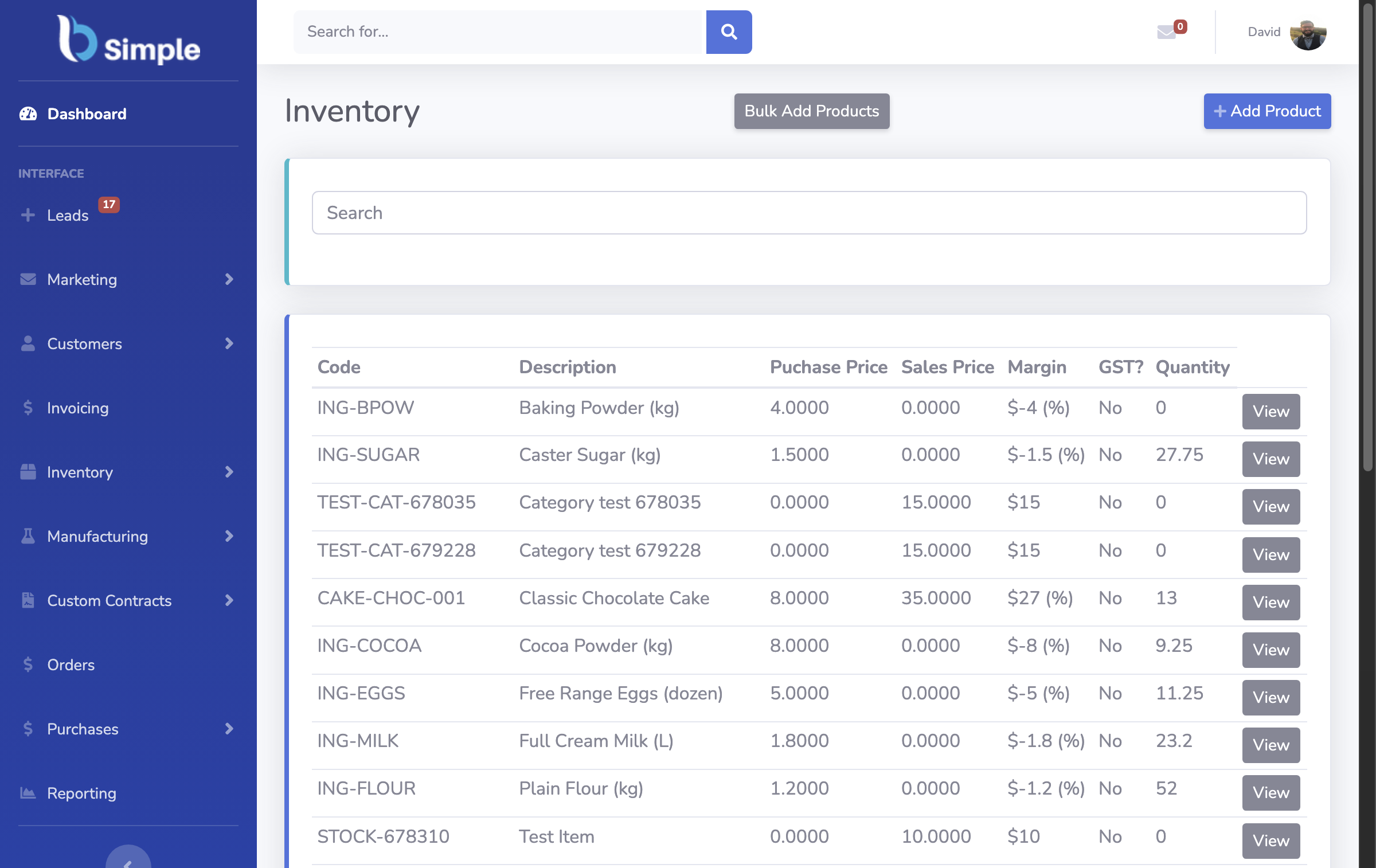
- Real-time inventory tracking across multiple warehouse locations with instant stock level visibility
- Automated purchase order generation triggered by customisable reorder points and supplier lead times
- Seamless Xero integration synchronising inventory movements with accounting records automatically
- Customer ordering portal providing real-time stock availability and accurate demand signals
- Negative inventory tracking monitoring backorders and unfulfilled demand patterns
- Supplier performance monitoring tracking delivery times and reliability metrics
- EOFY stocktake management simplifying year-end reconciliation and GST compliance reporting
Welcome to our guide on inventory management system just in time — see also our Inventory Management Software for the full picture. Just-in-time (JIT) inventory management has revolutionised how Australian wholesalers, manufacturers, and distributors operate. Rather than stockpiling products and tying up capital in warehouses, JIT systems ensure inventory arrives exactly when you need it. This approach dramatically reduces storage costs, minimises waste, and keeps cash flowing through your business more efficiently. For a Sydney coffee roaster managing seasonal demand or a Melbourne brewery juggling multiple SKUs, JIT inventory isn't just a nice-to-have — it's become essential for staying competitive. The challenge, however, is implementing JIT without creating stockouts or disrupting customer orders. That's where modern inventory management systems come in. They provide real-time visibility, automated purchasing triggers, and seamless integration with accounting software like Xero. BSimple specialises in helping Australian SMBs implement JIT strategies that actually work, combining intelligent inventory tracking with customer ordering portals and automated purchase order generation. When you get JIT right, you're not just reducing costs — you're building a leaner, more responsive business that can adapt to market changes faster than your competitors.
- 01Why Just-in-Time Inventory Matters for Australian Businesses
- 02How Just-in-Time Inventory Reduces Your Operating Costs
- 03Implementing JIT with Xero Integration for Seamless Operations
- 04Overcoming JIT Challenges with Smart Inventory Visibility
Why Just-in-Time Inventory Matters for Australian Businesses
Just-in-time inventory management works by synchronising your purchasing, production, and sales cycles so that stock arrives precisely when needed. Instead of forecasting demand months in advance and holding excess inventory, JIT systems use real-time data to trigger orders based on actual customer demand. This philosophy originated in Japanese manufacturing and has since become the gold standard for efficient supply chain management worldwide. For Australian distributors and wholesalers, JIT offers significant advantages: reduced warehouse costs, lower inventory holding periods, less product obsolescence, and improved cash flow. However, JIT also requires precision. A single miscalculation or supplier delay can lead to stockouts that disappoint customers and damage your reputation. This is where technology becomes critical. Modern inventory management systems provide the visibility and automation needed to execute JIT reliably. They track stock levels in real-time, monitor supplier performance, forecast demand based on historical patterns, and automatically generate purchase orders when inventory falls below defined thresholds. The best systems also integrate with your accounting software, eliminating manual data entry and ensuring your financial records stay accurate. For Australian businesses managing EOFY stocktakes or navigating GST compliance, this integration is invaluable. BSimple's platform combines JIT capabilities with Xero integration, giving you a complete picture of inventory, orders, and finances in one place. You can set reorder points for each product, track negative inventory when necessary, and generate reports that show exactly where your capital is tied up.
How Just-in-Time Inventory Reduces Your Operating Costs
How Just-in-Time Inventory Reduces Your Operating Costs
The financial benefits of JIT inventory are substantial and measurable. By reducing average inventory levels, you free up capital that would otherwise sit idle in warehouses. For a wholesale business with $500,000 tied up in stock, implementing JIT might reduce that to $300,000 — that's $200,000 available for other investments, equipment, or working capital. Storage costs drop significantly too. Fewer products in inventory means smaller warehouse space requirements, lower utility bills, reduced security needs, and less labour spent managing stock. Product obsolescence becomes less of an issue, particularly important for businesses with seasonal products or fast-changing inventory like fashion wholesalers or tech distributors. Spoilage and shrinkage decrease when inventory moves faster. For a Melbourne brewery, faster inventory turnover means fresher products reaching customers and less waste from expired stock. Insurance costs also decline with lower average inventory values. When you implement JIT effectively using a system like Order Management Software, these savings compound. You're not just cutting costs once — you're creating ongoing efficiency that improves your bottom line month after month. The key is having accurate data. If your system doesn't give you real-time visibility into stock levels and supplier lead times, you'll either hold excess safety stock (defeating JIT's purpose) or risk stockouts. BSimple's inventory management system provides the transparency you need, showing exactly how much stock you have, where it's located, and when it needs to be replenished. This accuracy translates directly into cost savings and improved profitability.
Implementing JIT with Xero Integration for Seamless Operations
Implementing JIT with Xero Integration for Seamless Operations
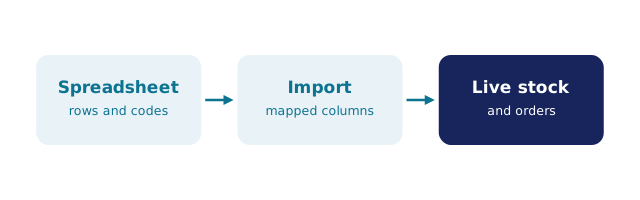
One of the biggest challenges Australian businesses face when implementing JIT is managing the disconnect between inventory systems and accounting software. Your warehouse team might know stock levels are low, but if that information doesn't flow automatically to your accounts, you end up with manual data entry, errors, and delayed financial reporting. This is where Xero integration becomes game-changing. When your inventory management system connects directly with Xero, several things happen automatically. Stock movements update your balance sheet in real-time, purchase orders flow directly into accounts payable, and customer invoices reflect current inventory status. For EOFY stocktakes, this integration eliminates hours of reconciliation work. Instead of manually comparing inventory records to Xero's figures, your system does it automatically. GST compliance becomes simpler too — every transaction is recorded consistently across both systems. BSimple's platform is built specifically for this Australian workflow. When you receive stock, the system updates inventory levels and creates the corresponding Xero journal entry. When you generate a purchase order, it's logged in both systems simultaneously. This eliminates the frustration of inventory records not matching your accounting records. For businesses managing multiple locations or complex supply chains, this integration is invaluable. A Sydney-based distributor with warehouses in different states can see consolidated inventory across all locations while maintaining accurate financial records in Xero. The automated purchase order generation feature is particularly powerful. Set reorder points for each product, and the system automatically creates POs when stock falls below those thresholds. This removes the manual work of monitoring inventory and ensures you never miss a reorder point. You can also track negative inventory tracking to understand backorder situations and customer demand patterns.
Overcoming JIT Challenges with Smart Inventory Visibility
Overcoming JIT Challenges with Smart Inventory Visibility
While JIT inventory offers tremendous benefits, it's not without challenges. The main risk is stockouts — if a supplier is late or demand spikes unexpectedly, you could run out of stock and disappoint customers. Another challenge is managing multiple suppliers and their varying lead times. A third-party logistics provider might deliver in 3 days while an international supplier takes 6 weeks. Coordinating these different timelines while maintaining JIT principles requires sophisticated planning. This is where advanced inventory management systems earn their keep. They provide visibility into supplier performance, track lead times accurately, and alert you when inventory is approaching critical levels. BSimple's platform includes features specifically designed to handle these JIT complexities. You can set different reorder points based on supplier lead times, ensuring you order early enough to account for longer delivery windows. The system tracks supplier reliability, showing you which suppliers consistently deliver on time and which ones are problematic. If a supplier is frequently late, you can adjust your safety stock accordingly or find alternatives. Customer ordering portals also play a role in JIT success. When customers can see real-time availability and place orders directly, you get accurate demand signals immediately. This helps you forecast more accurately and avoid both stockouts and overstock situations. For wholesale businesses serving multiple retailers or distribution partners, this visibility is crucial. A customer portal integrated with your inventory system means retailers can check stock availability before ordering, reducing back-and-forth communication and ensuring orders can be fulfilled. You can also manage negative inventory situations transparently — if you're out of stock but can backorder, customers know exactly when they'll receive their products. This builds trust and reduces customer service headaches. The combination of real-time inventory tracking, supplier management, and customer visibility creates a JIT system that actually works reliably, even for complex Australian supply chains.
Frequently Asked Questions
What exactly is just-in-time inventory management?
Just-in-time (JIT) is an inventory strategy where products arrive exactly when needed for production or sale, minimising storage and holding costs while maintaining efficient operations and cash flow.
How does JIT inventory reduce costs for Australian businesses?
JIT reduces warehouse space needs, lowers storage costs, minimises product obsolescence, decreases insurance expenses, and frees up capital otherwise tied up in excess inventory for other business investments.
Can JIT inventory work with Xero accounting software?
Yes, modern inventory management systems like BSimple integrate seamlessly with Xero, automatically updating stock movements, purchase orders, and financial records for accurate real-time accounting and simplified EOFY stocktakes.
What happens if a supplier is late with a JIT order?
Advanced inventory systems track supplier lead times and performance, allowing you to set appropriate safety stock levels and reorder points. Alerts notify you of delays so you can take action before stockouts occur.
Is JIT suitable for all types of wholesale and manufacturing businesses?
JIT works best for businesses with predictable demand, reliable suppliers, and adequate capital. High-variability demand or unreliable suppliers may require modified JIT approaches with strategic safety stock.
How do customer ordering portals support JIT inventory?
Customer portals provide real-time stock visibility and accurate demand signals, helping you forecast more accurately, reduce communication delays, and maintain optimal inventory levels without stockouts.
What role does negative inventory tracking play in JIT systems?
Negative inventory tracking shows backorder situations and unfulfilled demand, providing valuable insights into customer demand patterns and helping you adjust purchasing strategies and supplier relationships accordingly.
BSimple