
Guide / BSimple
Inventory Management System For Small Business Free: Easy Setup with Xero Integration
Running a small wholesale, manufacturing, or distribution business in Australia means juggling stock levels, managing customer orders, and keeping your accountant happy come EOFY.
- Real-time stock tracking across multiple locations with instant visibility into available inventory
- Barcode scanning capabilities for faster, accurate stocktakes and order picking processes
- Seamless Xero integration ensuring inventory and accounting records stay perfectly synchronised
- Automated purchase order generation based on reorder points and supplier lead times
- Customer ordering portals enabling 24/7 self-service ordering for wholesale clients
- Negative inventory tracking for backorders and just-in-time manufacturing operations
- Mobile accessibility allowing warehouse teams to access and update inventory from the floor
Looking for an inventory management system for small business free that actually works? See also our Inventory Management Software for the full picture. Running a small wholesale, manufacturing, or distribution business in Australia means juggling stock levels, managing customer orders, and keeping your accountant happy come EOFY. The challenge is that most inventory systems cost a fortune and require weeks of setup—time you simply don't have when you're busy filling orders and keeping your operation running. The good news? You don't need to spend thousands on enterprise software to get real control over your stock. A smart, affordable inventory management system designed specifically for small Australian businesses can transform how you track stock, manage orders, and integrate with your existing accounting setup. BSimple brings together the essential features you need—Xero integration, automated order management, and straightforward stocktake tools—without the bloated complexity or hefty price tag. Whether you're a Melbourne brewery managing fermentation schedules, a Sydney coffee roaster tracking bean inventory across multiple locations, or a manufacturing business coordinating just-in-time stock, the right system removes the guesswork and gives you visibility across your entire operation.
- 01Why Your Small Business Needs Proper Inventory Management Today
- 02Core Features Every Inventory System Must Include
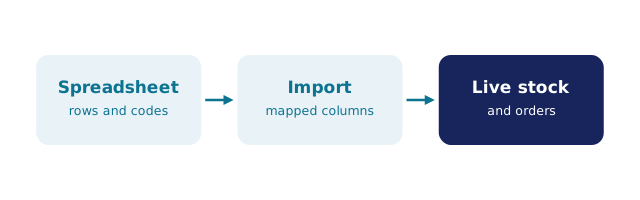
- 03How Xero Integration Simplifies Your Accounting
- 04Implementation Strategy and Measuring Success
Why Your Small Business Needs Proper Inventory Management Today
Small business owners often ask: why should I invest in inventory management software when I can just use a spreadsheet? Fair question. But here's the reality—spreadsheets break down fast. They're prone to errors, they don't talk to your accounting software, and when you need to find out why your stock counts don't match your records, you're stuck manually trawling through rows and columns. An inventory management system for small business free (or low-cost) solves these problems by automating the tedious bits and giving you real-time visibility into what you actually have on hand. Consider a typical wholesale distributor in Sydney. They might receive orders from multiple customers daily, need to check stock availability instantly, and then generate purchase orders to their suppliers. Without proper inventory management, they're manually checking stock levels, creating POs in Word documents, and hoping nothing falls through the cracks. With the right system, customer orders flow in, stock levels update automatically, and when inventory hits a threshold, purchase orders generate themselves. That's not just convenient—it's a game-changer for cash flow and customer satisfaction. For manufacturing businesses, the stakes are even higher. You need to track raw materials, work-in-progress inventory, and finished goods simultaneously. You might also need negative inventory tracking to handle backorders or just-in-time manufacturing where components arrive as you need them. A proper inventory management system handles all of this without requiring a dedicated inventory manager on your payroll. The best part? When your system integrates seamlessly with BSimple's cloud-based platform, your stock movements automatically sync with your Xero accounting records, eliminating double-entry and keeping your financial records accurate.
Core Features Every Inventory System Must Include
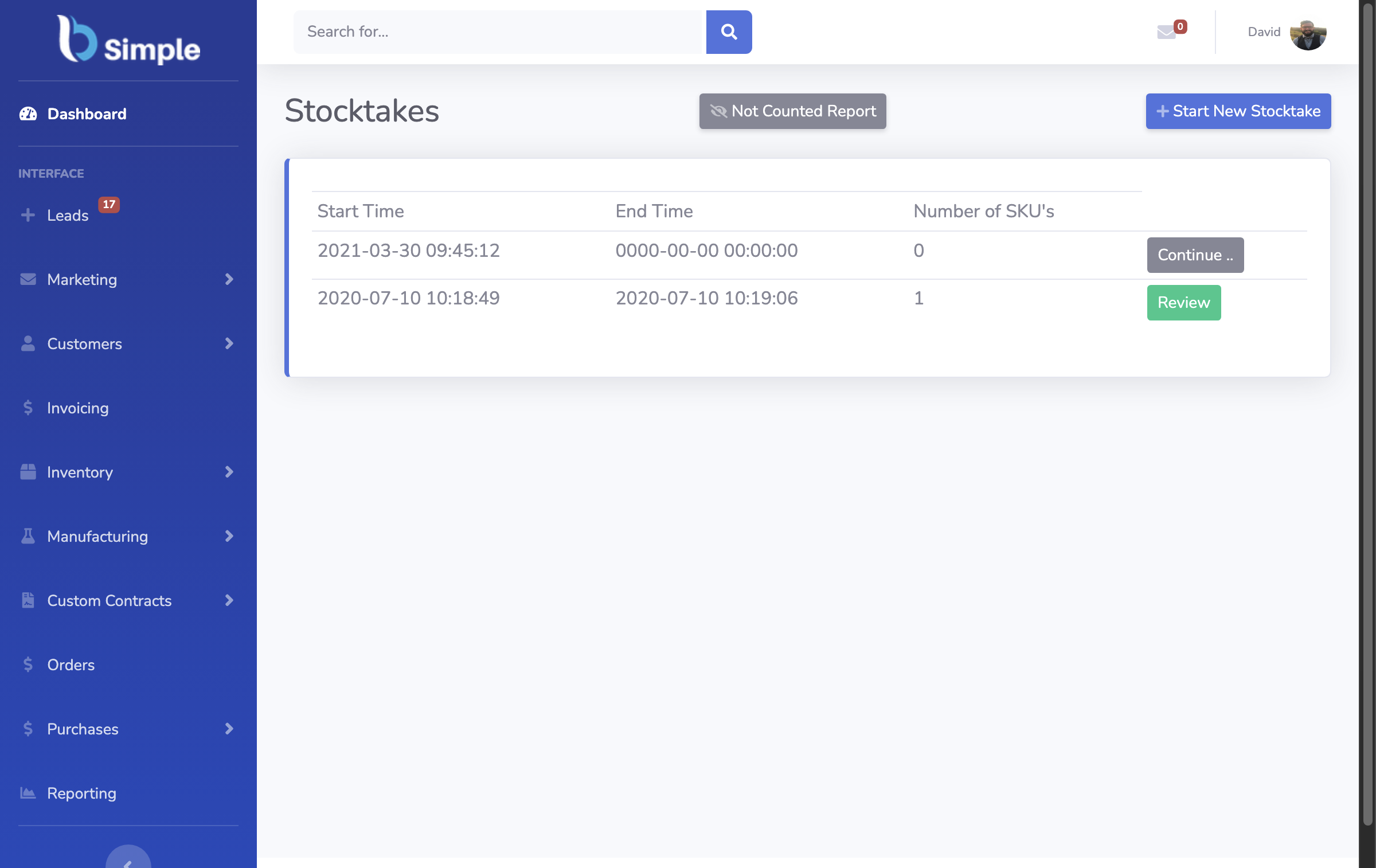
Let's talk about the specific pain points that an inventory management system for small business free addresses. First up: stocktake accuracy. Most small businesses conduct physical stocktakes quarterly or at EOFY—and it's always a nightmare. You're manually counting items, scribbling numbers on clipboards, and then trying to reconcile discrepancies. This process is time-consuming, error-prone, and often reveals mysterious stock shrinkage that nobody can explain. A modern inventory system streamlines stocktakes dramatically. Instead of pen and paper, your team uses mobile devices to scan barcodes or enter counts directly into the system. The software automatically compares counted quantities against recorded stock levels and flags discrepancies immediately. For Australian businesses managing GST compliance, this accuracy matters—your EOFY stocktake directly impacts your tax position. Second issue: visibility across locations. If you operate multiple warehouses, retail locations, or production facilities, you need to know where stock is at any moment. A centralised inventory management system gives you that bird's-eye view. A Melbourne brewery with a production facility and a retail taproom can see fermentation tanks in progress, finished kegs ready for delivery, and retail stock all in one dashboard. This prevents overselling, improves order fulfilment speed, and helps with production planning. Third challenge: supplier management and purchase orders. Generating POs manually is tedious and error-prone. An integrated system can automate PO creation based on stock levels, reorder points, and supplier lead times. When you link this with automated PO generation features, you're essentially having an assistant who never forgets to order stock and never miscalculates quantities. For distribution businesses managing hundreds of SKUs across dozens of suppliers, this automation is invaluable.
How Xero Integration Simplifies Your Accounting
Let's look at some practical examples of how an inventory management system for small business free transforms operations. Consider a Sydney coffee roaster with three retail locations and a wholesale distribution operation. Previously, they were manually tracking bean inventory across locations using spreadsheets. They'd roast beans at their production facility, distribute to retail locations, and also fulfil wholesale orders to local cafes. The problem: nobody had a clear picture of what was in stock where. They'd sometimes oversell, leaving wholesale customers disappointed. Retail locations would run out of popular blends. And at EOFY, the stocktake was chaotic—numbers never matched. After implementing a proper inventory system with barcode scanning, everything changed. Each location scans stock movements in real-time. The roastery sees exactly what's in each retail location and what's committed to wholesale customers. When a cafe places a wholesale order, the system checks availability across the entire operation and confirms immediately. Stocktakes now take hours instead of days, and discrepancies are minimal. Their cash flow improved because they're not tying up capital in excess inventory, and customer satisfaction increased because orders are fulfilled reliably. Now consider a Melbourne manufacturing business producing custom industrial components. They need to track raw materials, work-in-progress inventory through various production stages, and finished goods awaiting shipment. They also work on tight tolerances where material waste is expensive. Previously, they had no visibility into material usage or production efficiency. A manufacturing-focused inventory system changed this. They can now track material consumption per job, identify which production runs are most efficient, and spot waste patterns. They also manage supplier relationships better—the system tracks lead times and automatically orders materials based on production schedules. This just-in-time approach reduces working capital tied up in inventory while ensuring production never stalls waiting for materials. For a Brisbane distribution company managing 2,000+ SKUs across multiple supplier relationships, an inventory system with automated PO generation was transformative. Instead of manually reviewing stock levels weekly and creating POs in spreadsheets, the system does this continuously. Stock levels stay optimal, supplier relationships improve because orders are predictable and timely, and the team has time to focus on customer service rather than administrative tasks. These aren't theoretical benefits—they're real outcomes that Australian businesses achieve every day with proper inventory management systems.
Implementation Strategy and Measuring Success
You might be thinking: implementing a new system sounds complicated. How do I get started without disrupting my business? The good news is that modern cloud-based inventory systems are designed for straightforward implementation. Here's a practical approach. First, audit your current process. How are you currently tracking inventory? What's working and what's causing headaches? Document your main pain points—whether that's stocktake accuracy, visibility across locations, or supplier management. This helps you choose a system that addresses your specific needs. Second, start with core functionality. You don't need every feature on day one. Focus on getting stock tracking and barcode scanning working properly. Train your team on the basics. Once that's solid, layer in additional features like automated POs or customer ordering portals. This phased approach reduces disruption and gives your team time to adapt. Third, establish data hygiene from the start. Make sure your product master data is clean—accurate SKU numbers, correct descriptions, proper categorisation. Poor data in means poor information out. Spend time upfront getting this right. Fourth, set up reorder points intelligently. Work with your suppliers to understand lead times, then set reorder points that account for typical demand during the lead time plus a safety buffer. This prevents stockouts while minimising excess inventory. Fifth, implement cycle counting rather than relying solely on annual stocktakes. Count a portion of your inventory weekly or monthly, rotating through different product categories. This catches discrepancies early, keeps inventory records accurate throughout the year, and makes EOFY stocktakes much simpler. Finally, use your system to generate insights. Once you have reliable data flowing through your inventory system, use it to inform decisions. Analyse which products move fastest, which suppliers are most reliable, where you're holding excess stock. An inventory management system for small business free is only valuable if you actually use the information it provides. The best implementations treat the system as a strategic tool, not just a data entry platform. For Australian businesses preparing for EOFY, proper inventory management throughout the year means stocktakes are quick, accurate, and stress-free. You're not scrambling to count everything on one chaotic day—you've been counting continuously and reconciling discrepancies as they arise. This approach also ensures your tax position is clear well before your accountant needs it, giving you time to implement any tax planning strategies. For a closer look at how these capabilities fit together, our warehouse management software guide ties it all together, and the guide to reddit walks through the practical details.

Frequently Asked Questions
Is there a truly free inventory management system for small businesses?
Most genuinely free systems have significant limitations—basic tracking only, limited users, no integrations, or minimal support. Cloud-based systems designed for Australian SMBs typically offer affordable pricing (often under $50-100/month) with essential features, Xero integration, and proper support, which provides far better value than truly free options.
How does Xero integration benefit my small business?
Xero integration ensures inventory movements automatically update your accounting records, eliminating manual reconciliation. Your balance sheet stays accurate, EOFY stocktakes are simpler, GST calculations are correct, and your accountant spends less time reconciling conflicting data between systems.
Can I use an inventory system if I have multiple warehouse locations?
Absolutely. Cloud-based inventory systems are designed for multi-location management. You see stock across all locations in one dashboard, manage transfers between locations, and ensure stock visibility whether you operate two warehouses or five different facilities.
How long does implementation typically take for a small business?
For a small business with straightforward operations, basic implementation takes 1-2 weeks. This includes data setup, team training, and getting barcode scanning operational. Phased implementation—starting with core features and adding capabilities gradually—minimises disruption to your business.
What's the ROI for implementing an inventory system?
Most small businesses see ROI within 3-6 months through reduced administrative time, fewer stockouts, better cash flow from optimised inventory levels, and improved supplier management. The time your team saves on manual stock tracking alone typically exceeds the system cost.
Do I need technical skills to use an inventory management system?
Modern cloud-based systems are designed for business users, not IT specialists. If your team can use email and spreadsheets, they can learn an intuitive inventory system. Providers typically offer training and ongoing support to ensure your team is comfortable with the platform.
How does negative inventory tracking work for backorders?
Negative inventory tracking allows you to record customer orders even when stock is temporarily unavailable. The system tracks committed inventory separately, preventing overselling while allowing you to fulfil backorders as stock arrives. This is essential for manufacturing and distribution businesses managing just-in-time operations.
BSimple