
Guide / BSimple
Sync Inventory Management System For Shopify Automatically Get It Done Faster
If you're running a Shopify store and struggling to keep inventory in sync across multiple channels, you're not alone — see also our Inventory Management Software for the full picture of what modern inventory control …
- Real-time Shopify inventory synchronisation with automatic stock level updates across all channels
- Seamless Xero integration for automatic financial reconciliation and GST compliance tracking
- Negative inventory tracking to manage backorders and pre-orders without overselling
- Automated purchase order generation based on reorder points and stock thresholds
- Customer ordering portal for wholesale clients with real-time stock visibility and order tracking
- Stocktake management tools for accurate EOFY reconciliation and physical count verification
- Multi-channel inventory centralisation across Shopify, physical locations, and wholesale channels
If you're running a Shopify store and struggling to keep inventory in sync across multiple channels, you're not alone — see also our Inventory Management Software for the full picture of what modern inventory control looks like. Managing stock manually across Shopify, your warehouse, and accounting software is a recipe for overselling, stockouts, and wasted time. That's where an automated inventory management system for Shopify comes in. BSimple connects directly to your Shopify store and syncs inventory in real-time, so your stock levels stay accurate whether you're selling online, in-store, or through wholesale channels. For Australian businesses—from Sydney coffee roasters to Melbourne breweries—this kind of automation isn't just convenient, it's essential. When you're juggling multiple sales channels, the last thing you need is a customer ordering something that's already sold out, or worse, discovering you've oversold and can't fulfil the order. BSimple eliminates that headache by automatically updating your Shopify inventory whenever stock moves, whether that's a customer purchase, a warehouse adjustment, or a supplier delivery. Combined with seamless Xero integration, you get a complete picture of your inventory and finances in one place, making it easier to manage cash flow, track costs, and prepare for EOFY stocktakes without the usual stress.
- 01Why Real-Time Inventory Sync Matters For Your Business
- 02Connect Everything Seamlessly Into One System
- 03See Your Stock Levels Accurately Across All Channels
- 04Automate Orders And Streamline Supplier Management
Why Real-Time Inventory Sync Matters For Your Business
Why Shopify Store Owners Need Proper Inventory Management
Running a Shopify store looks straightforward on the surface—set up products, wait for orders, ship them out. But the reality gets complicated fast, especially once you're selling across multiple channels. Maybe you've got a physical shopfront in addition to your online store, or you're selling wholesale to other retailers. Suddenly you've got inventory scattered across different systems, and keeping everything in sync becomes a nightmare. Without proper inventory management, you're vulnerable to overselling—that moment when a customer orders something you don't actually have in stock. Not only does this damage your reputation, but it also creates operational chaos as you scramble to source the product or issue refunds. On the flip side, you might understock popular items and miss out on sales revenue. BSimple's inventory management system for Shopify solves this by creating a single source of truth for all your stock. Real-time syncing means your Shopify store always shows accurate inventory levels, reducing the risk of overselling and helping you maintain customer trust. For wholesale and distribution businesses, this is even more critical—your customers depend on accurate stock information to plan their own orders. The system also tracks negative inventory, which is particularly useful during stocktakes or when you're waiting on supplier deliveries. This feature prevents you from accidentally selling stock you don't have yet, whilst still allowing you to manage backorders intelligently.
Connect Everything Seamlessly Into One System
Seamless Integration With Your Existing Systems
One of the biggest pain points for Australian SMBs is dealing with software that doesn't talk to each other. You've got Shopify handling sales, Xero managing your finances, maybe a separate warehouse system, and invoicing software all operating in silos. Every time something changes in one system, you're manually updating the others—or worse, forgetting to update them entirely. This creates data inconsistencies, makes reconciliation a nightmare, and wastes countless hours. BSimple was built specifically to bridge this gap. Our Xero integration means your inventory movements automatically flow through to your accounting software, so your stock valuations are always accurate. When you receive a purchase order from a customer through your Shopify store, BSimple can automatically generate a corresponding purchase order in your system, triggering your suppliers and streamlining procurement. This is especially valuable for manufacturing and distribution businesses where order-to-delivery cycles are tightly managed. The customer ordering portal feature lets your wholesale customers place orders directly, see real-time stock availability, and track their orders—all without you having to manually process inquiries or phone calls. For a Melbourne brewery selling to bottle shops and restaurants across Victoria, this kind of automation transforms operations. Instead of managing dozens of phone calls and emails each week, your customers self-serve, orders flow automatically into your system, and invoicing happens without manual intervention. The time savings alone pay for the software within weeks.
See Your Stock Levels Accurately Across All Channels
Real-Time Inventory Tracking Across Multiple Channels
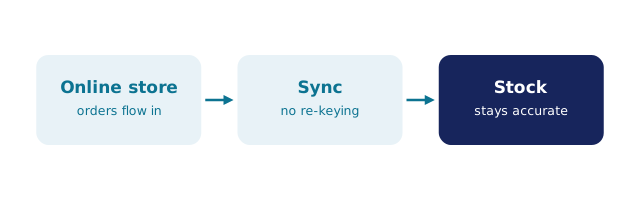
The challenge with multi-channel selling is that inventory moves constantly across different platforms and sales methods. A customer buys through your Shopify store, another orders via your customer portal, a third walks into your physical location, and you've got wholesale orders coming in simultaneously. Without real-time synchronisation, your inventory counts diverge rapidly, and you lose visibility into what you actually have available. BSimple's real-time inventory tracking ensures every sale, adjustment, and receipt updates your stock levels instantly across all channels. This means your Shopify store, your customer ordering portal, and your warehouse all see the same inventory count at any given moment. For just-in-time inventory operations—common in manufacturing and distribution—this accuracy is crucial. You can't afford to hold excess stock, so you need to know precisely what's on hand, what's coming in, and what's allocated to pending orders. BSimple gives you that visibility. The system also supports negative inventory tracking, which allows you to manage backorders and pre-orders without overselling. If a customer orders something that's temporarily out of stock, you can allow the order but flag it as a backorder, then automatically fulfil it when stock arrives. This flexibility is particularly valuable during busy trading periods or when you're waiting on supplier deliveries. The stocktake management features make EOFY reconciliation much simpler—you can run physical counts and reconcile them against system records in minutes rather than days, and the system flags discrepancies so you can investigate and correct them before your accountant needs the figures for GST compliance and tax purposes.
Automate Orders And Streamline Supplier Management
For a closer look at how these capabilities fit together, our warehouse management software guide ties it all together, and the guide to related topics walks through the practical details. Automated Order Management and Supplier Integration
Once you've got inventory visibility sorted, the next efficiency gain comes from automating order workflows. Traditional order management is labour-intensive—customers place orders through various channels, you manually consolidate them, create purchase orders for suppliers, track deliveries, receive stock, and then reconcile everything. It's repetitive, error-prone, and ties up your team's time on administrative tasks rather than growing the business. BSimple automates this entire workflow. When customers place orders through your Shopify store or customer portal, the system can automatically generate corresponding purchase orders to your suppliers, with quantities calculated based on your stock levels and reorder points. This just-in-time approach means you're ordering exactly what you need, when you need it, reducing carrying costs and freeing up cash flow. For Australian distribution businesses managing multiple SKUs and supplier relationships, this automation is transformative. You can set up intelligent reorder rules so that when stock drops below a certain threshold, the system automatically creates a PO and notifies your suppliers. Supplier integration means you can track incoming deliveries directly in the system, so you know precisely when stock will arrive and can plan accordingly. When goods arrive at your warehouse, receiving them in BSimple updates your inventory instantly, and the system matches the receipt against the original PO to catch any discrepancies. This level of automation is especially valuable for businesses like Sydney coffee roasters who might manage dozens of SKUs across beans, equipment, and packaging, all with different supplier lead times. By automating the routine order management tasks, your team can focus on customer service, quality control, and strategic decisions about inventory levels and product mix. The result is faster order fulfilment, fewer errors, and better cash flow management—all critical for maintaining competitiveness in wholesale and distribution markets.
Frequently Asked Questions
How does BSimple sync inventory with my Shopify store?
BSimple connects directly to your Shopify API and syncs inventory in real-time. Whenever stock moves—whether through a Shopify sale, warehouse adjustment, or supplier delivery—the system updates your Shopify inventory instantly, ensuring your store always shows accurate stock levels across all products and variants.
Can I manage multiple sales channels with one inventory system?
Yes. BSimple centralises inventory management across Shopify, your customer ordering portal, physical locations, and wholesale channels. All channels share the same real-time stock data, eliminating overselling and ensuring consistency across every sales touchpoint.
Does BSimple integrate with Xero?
Absolutely. BSimple's seamless Xero integration means inventory movements automatically flow through to your accounting software. Stock receipts, sales, and adjustments update your accounts instantly, making reconciliation simpler and ensuring your financial records match your physical inventory.
What happens if I oversell on Shopify?
BSimple prevents overselling through real-time inventory synchronisation. Your Shopify store only shows stock that's actually available. If you enable backorder functionality, customers can order out-of-stock items, and the system flags these as backorders so you can fulfil them when stock arrives without double-selling.
How does negative inventory tracking work?
Negative inventory allows you to accept orders for stock that's temporarily unavailable or in transit from suppliers. The system tracks these as backorders or pre-orders, preventing overselling whilst maintaining flexibility during supply chain delays or high-demand periods.
Can I automate purchase orders to my suppliers?
Yes. BSimple can automatically generate purchase orders based on your reorder points and stock levels. You can set intelligent rules so that when inventory drops below a threshold, the system creates a PO and notifies your suppliers, supporting just-in-time inventory management.
How does BSimple help with EOFY stocktakes?
BSimple's stocktake management features let you run physical counts and reconcile them against system records quickly. The system flags discrepancies so you can investigate and correct them before EOFY, simplifying compliance and ensuring accurate figures for GST and tax purposes.
BSimple