
Guide / free, done properly
Free inventory management in Google Sheets
Google Sheets is the best free inventory tool most businesses ignore: one shared copy, real multi-user editing, version history. Here is the template to build, the rules to keep it honest — and the ceiling it cannot clear.
The key facts
- The template: two tables — products and movements — with quantity as a SUMIF formula, never typed in place.
- The sharing rules: one sheet, one owner, everyone else edits only the movements table; versions live in history, not filenames.
- The ceiling: commitments (orders draining stock in real time) and the accounting handoff — the record layer no sheet clears.
- BSimple's role: import the sheet when the ceiling arrives; the trial runs your products in the system for free first.
- The full picture: how the inventory record works is the hub page for everything above.
- 01The key facts
- 02The template: two tables and one rule
- 03The rules that keep it honest
The template: two tables and one rule
Table one, products: code, description, cost, reorder level, location. Table two, movements: date, product code, quantity in or out, reason, operator. Quantity per product is then a formula — SUMIF over the movements table — and never a cell anyone types into. That one rule is the difference between a list and a ledger: every quantity traceable to the movements that justify it, errors visible as discrepancies instead of overwritten into silence.
On top of it: a low-stock flag (conditional formatting when quantity dips under reorder level), data validation on product codes in the movements table, and a barcode column for scan entry from a phone or scanner. Share the sheet with edit access restricted to the movements table — the products table belongs to its owner. The same template in Excel works identically; Sheets' advantage is the sharing, not the structure.
The rules that keep it honest
- A movement row per event, immediately. The sheet is only as true as the delay between the physical move and the row.
- No "correcting" quantities. A discrepancy is recorded as a movement with a reason (count correction), not as an edit to the formula result — the evidence survives.
- Codes are sacred. Validation on entry; renaming a product is a decision, not a typo.
- One owner. Multi-user editing is Sheets' superpower, but someone still owns the structure, the codes and the weekly review.
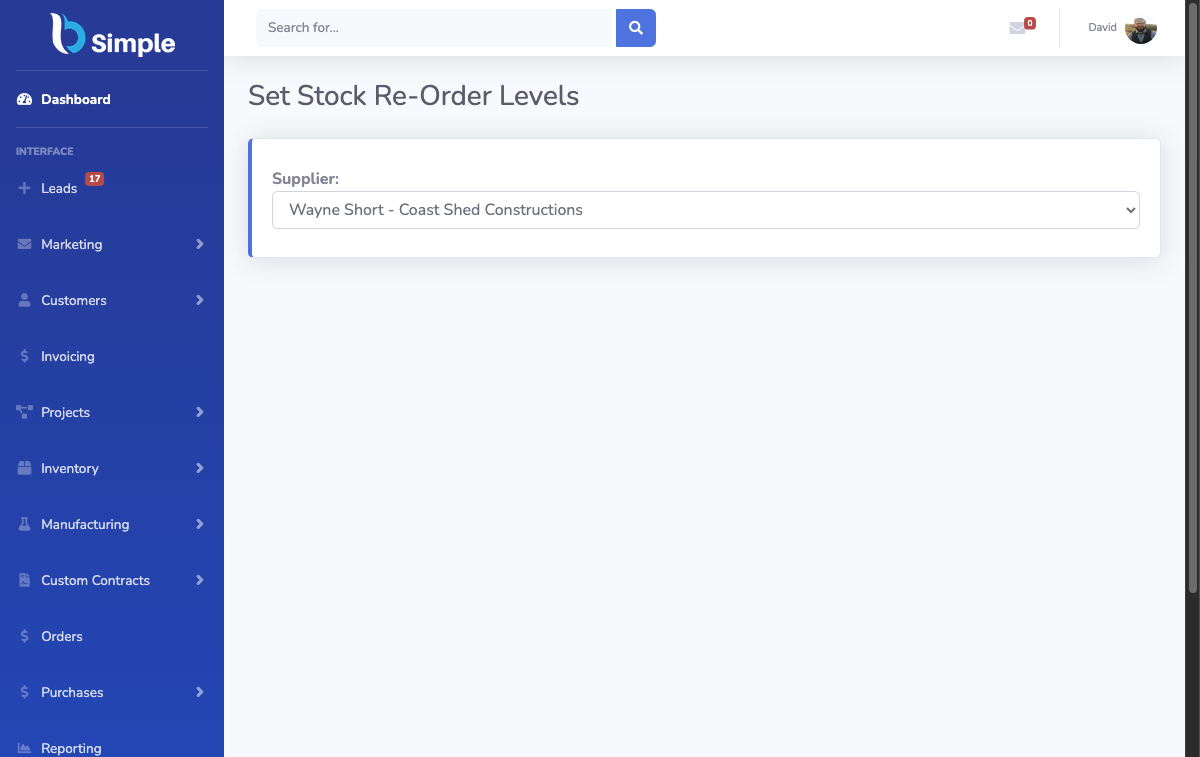
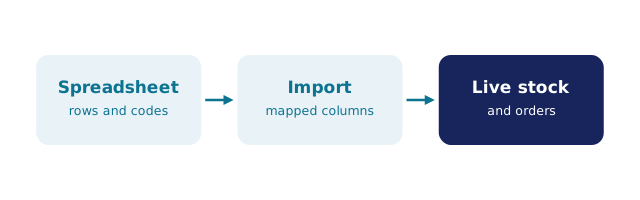
The ceiling, stated plainly: Sheets cannot deduct stock when an order is committed — the deduction happens when someone remembers the row, and overselling lives in the lag. Nor can it hand invoices to the books without re-entry. We build BSimple, so weigh that: it is the record layer for wholesale, manufacturing, distribution and trade businesses — live quantities, orders deducting on approval, purchase orders from demand, batch tracking, the accounting handoff to Xero or MYOB — from $180/month AUD, importing your sheet rather than discarding it. Sheets versus a record, compared, the Excel equivalent and the free ladder in full cover the surrounding ground; the trial is the test that ends the debate on your own products.
Frequently Asked Questions
Is Google Sheets good for free inventory management?
Yes — one shared copy, real multi-user editing, version history, and enough formula power for a ledger-style template. It carries a small operation honestly until commitments and books demand a record.
What formulas does a Sheets inventory need?
SUMIF for running quantities per product, conditional formatting for low-stock flags, and data validation on codes. Everything else is optional; those three make the sheet a ledger rather than a list.
How many people can use a Sheets inventory?
Technically many; practically two or three before coordination overhead outweighs the tool. The failure is not simultaneous editing — Sheets handles that — it is the growing lag between physical movement and row entry.
When should we move from Sheets to a system?
When commitments need to deduct stock in real time — a second channel, a second person taking orders, the first oversell. The trial imports your sheet and runs the comparison on your own products.
What does BSimple cost after the free option?
Starter $180, Professional $250 and Organisation $399 per month AUD, flat, everything in the core plans. The honest comparison is the sheet's hidden schedule: reconciliation hours, oversells, count-day surprises.

BSimple