
Guide / risk and operations
Enterprise risk management software — and the risks operations software actually owns
ERM platforms manage the register of risks. Operations software eliminates a handful of them at the source. What ERM solutions do, what BSimple genuinely reduces, and where each stops.
The key facts
- ERM software runs the risk function itself: risk registers, control mapping, assessments, incident logs, board reporting — a governance product, not an operations one.
- BSimple is not ERM and will not pretend: no register, no assessment workflows, no compliance dashboards.
- What it genuinely reduces: stock-truth risk (overselling, vanished quantities), supply risk (reorder discipline), and record-integrity risk (audit trail on every transaction).
- The honest pairing: many businesses run both — an ERM register for governance, an operations record that quietly removes the operational half of the list.
- 01The key facts
- 02What enterprise risk management software actually does
- 03The operational risks a good record removes at the source
- 04BSimple's position, plainly
What enterprise risk management software actually does
ERM platforms are the software of the risk function: a central register of risks scored by likelihood and impact, each mapped to controls and owners, with assessment workflows, incident capture, and the reporting layer boards and auditors consume. In larger organisations this is a genuine discipline — the alternative is risks living in a spreadsheet nobody re-scores — and specialised vendors do it well. Some ERP suites bundle risk modules; consultancies productise frameworks on top of them.
Nothing in that description is what BSimple does, and this page will not blur it into a sale. If your need is the register — governance, compliance mapping, board packs — an ERM product is the correct tool category.
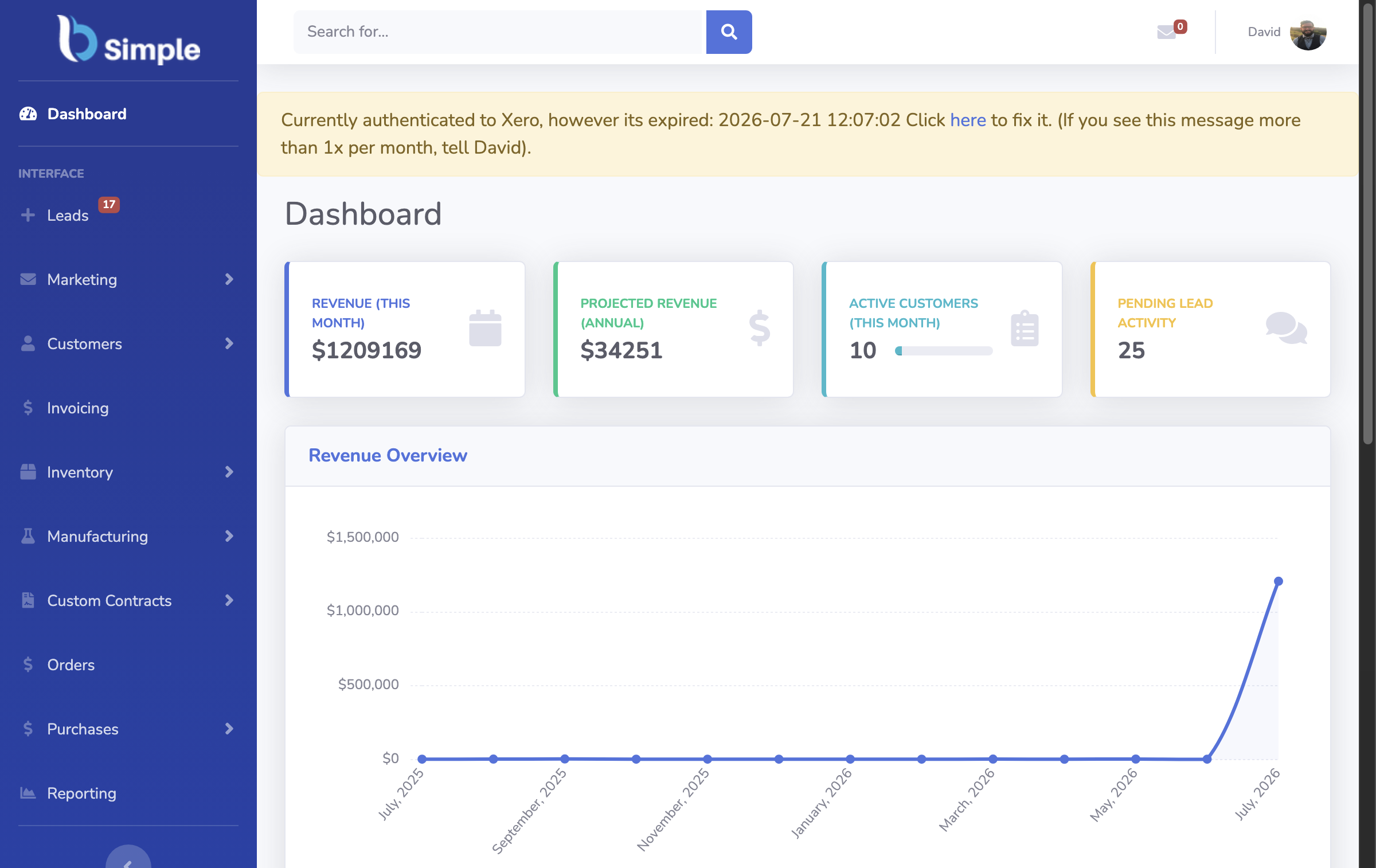
The operational risks a good record removes at the source
Stock-truth risk. Overselling, vanished quantities, a record that disagrees with the shelf — these are not "risks to accept and monitor" but failures to engineer away: live quantities, negative-inventory guardrails, and a movement history that answers every discrepancy. That is the daily substance of what BSimple runs.
Supply risk. Stockouts discovered by customers, double-ordering because in-transit stock was invisible, supplier price drift noticed a quarter late. Reorder levels and purchase-order discipline shrink these from recurring events to occasional exceptions.
Record-integrity risk. When an auditor, insurer or customer asks "prove it", the answer is either a transaction history or a week of archaeology. BSimple's audit trail records who did what and when, with tenant isolation underneath — unglamorous, and exactly what the risk register would otherwise describe as an uncontrolled process.
Read together, that is the honest pairing: the ERM register documents these risks; the operations record removes them. The business-continuity angle covers the cousin discipline — keeping operations running through disruption — from the same boundary.
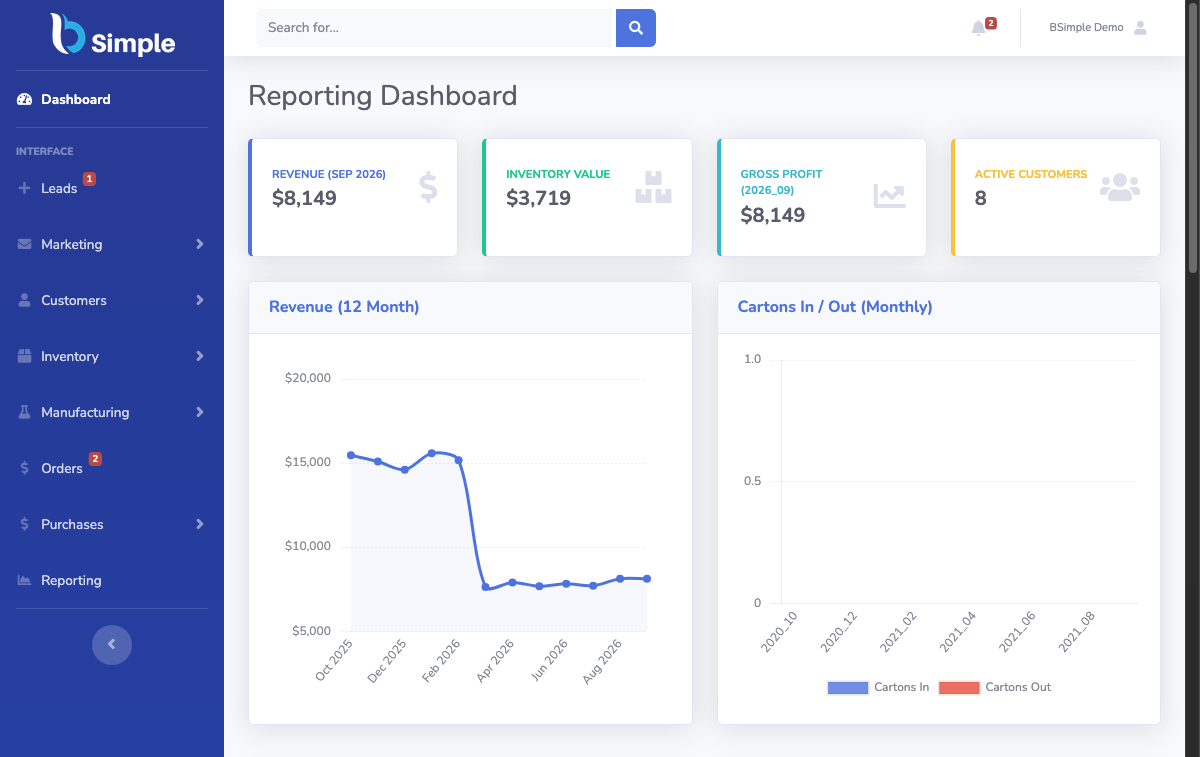
BSimple's position, plainly
We build BSimple, so weigh that. It is Australian operations software for wholesale, manufacturing, distribution and trade businesses — not an ERM product, with no claim to the governance layer. What it offers the risk conversation is subtraction: fewer uncontrolled processes, fewer silent adjustments, fewer single points of human memory. Plans run $180/$250/$399 per month AUD, and the trial demonstrates the record on your real products — including the guardrails, which are best seen on a bad day.
Frequently Asked Questions
Is BSimple an ERM solution?
No. It has no risk register, assessment workflows or compliance dashboards. What it reduces is a set of operational risks — stock truth, supply discipline, record integrity — at the source, which is a complement to ERM governance, not a substitute.
Can an operations system replace a risk register for a small business?
It can replace the uncontrolled processes a register would document, but not the register's job — deciding which risks you accept, transfer or mitigate. Even a one-page register, reviewed occasionally, covers what software cannot: judgement.
Which operational risks should we expect software to remove entirely?
The mechanical ones: overselling below zero, unexplained quantity changes, double-ordering against invisible in-transit stock. Human-scale risks — keying errors, judgement calls — get caught by guardrails and audit trails rather than eliminated.
How does the audit trail help with insurance or disputes?
It is evidence: who received what, when a quantity changed and why, which batch reached which customer. Claims and disputes resolve on records, and the difference between minutes and weeks of assembly is often the outcome.
We need both a register and better operations — where to start?
Start with the operations record, because it shrinks the register: half of most small-business risk lists are stock-truth and supply items that good operational discipline retires. The trial shows what drops off your list.

BSimple