
Guide / enterprise systems
Enterprise management system vs ERP — what is the real difference?
The terms overlap more than vendors admit. The real choice is architectural: one suite that runs everything, or focused systems integrated around your accounting.
The facts about EMS versus ERP
- Same acronym family, different architectures: ERP aims to run everything inside one suite; an enterprise management system often means focused tools integrated with the systems you already run.
- The accounting question separates them fastest: does the vendor want to be your ledger, or hand off to Xero or MYOB?
- ERP pays off at genuine enterprise scale — multi-entity, multi-country, hundreds of staff. Below that, it is usually overhead without return.
- The focused-integration approach trades breadth for speed: operational in weeks, priced publicly, and replaceable piece by piece.
- BSimple is the focused kind: operations on one record, accounting handed to Xero or MYOB, from $180/month (AUD).
- The full picture: how the inventory record works is the hub page for everything above.
- 01The facts about EMS versus ERP
- 02First, the terms — because vendors use them loosely
- 03When the ERP answer is genuinely right
- 04What the focused-integration approach looks like
- 05The decision, in three questions
First, the terms — because vendors use them loosely
ERP (enterprise resource planning) is the all-in-one tradition: finance, inventory, manufacturing, HR and more inside a single suite, sold through lengthy implementations. Enterprise management system (EMS) has no single fixed definition — some vendors use it as a friendlier name for ERP; others mean a layer of focused operational systems connected to best-of-breed accounting. When comparing, ignore the label and ask the architectural question: does this vendor want one suite to swallow everything, or one job done well and integrated?
The second distinguishing question is accounting. ERP suites typically absorb the general ledger — you migrate your books. The focused approach keeps Xero or MYOB as the system of record and hands invoices across. For an Australian business with an accountant who lives in Xero, that difference alone settles most arguments.
When the ERP answer is genuinely right
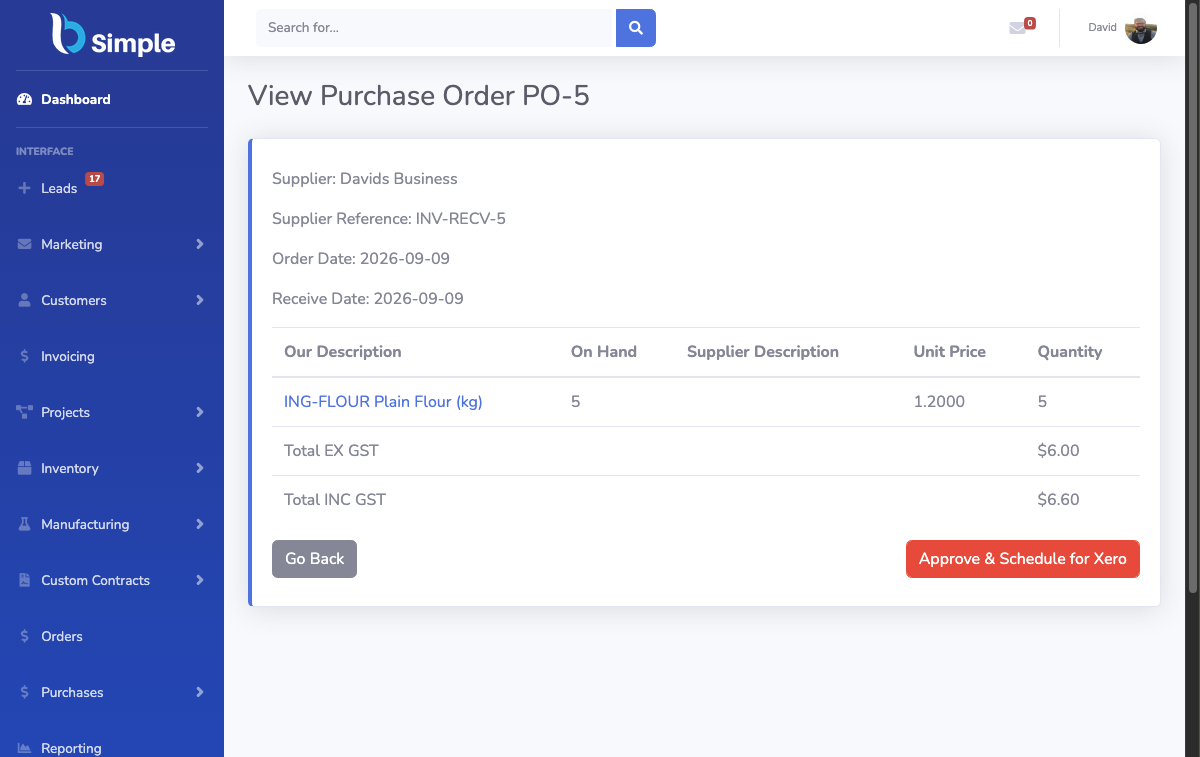
ERP earns its cost in specific conditions: multiple legal entities consolidating financials; operations across countries with different tax regimes; manufacturing where MRP-level scheduling of machines and materials is the core discipline; or an organisation large enough to employ system administrators as a function. In those settings, the suite's breadth and auditability justify the project.
They also justify the costs that come with it: licence and implementation investment quoted only after a sales process, months-to-years timelines, and permanent internal ownership of the system. The mistake is not choosing ERP; it is choosing it at a scale where the complexity being managed does not exist yet — paying enterprise prices to solve spreadsheet problems.
What the focused-integration approach looks like
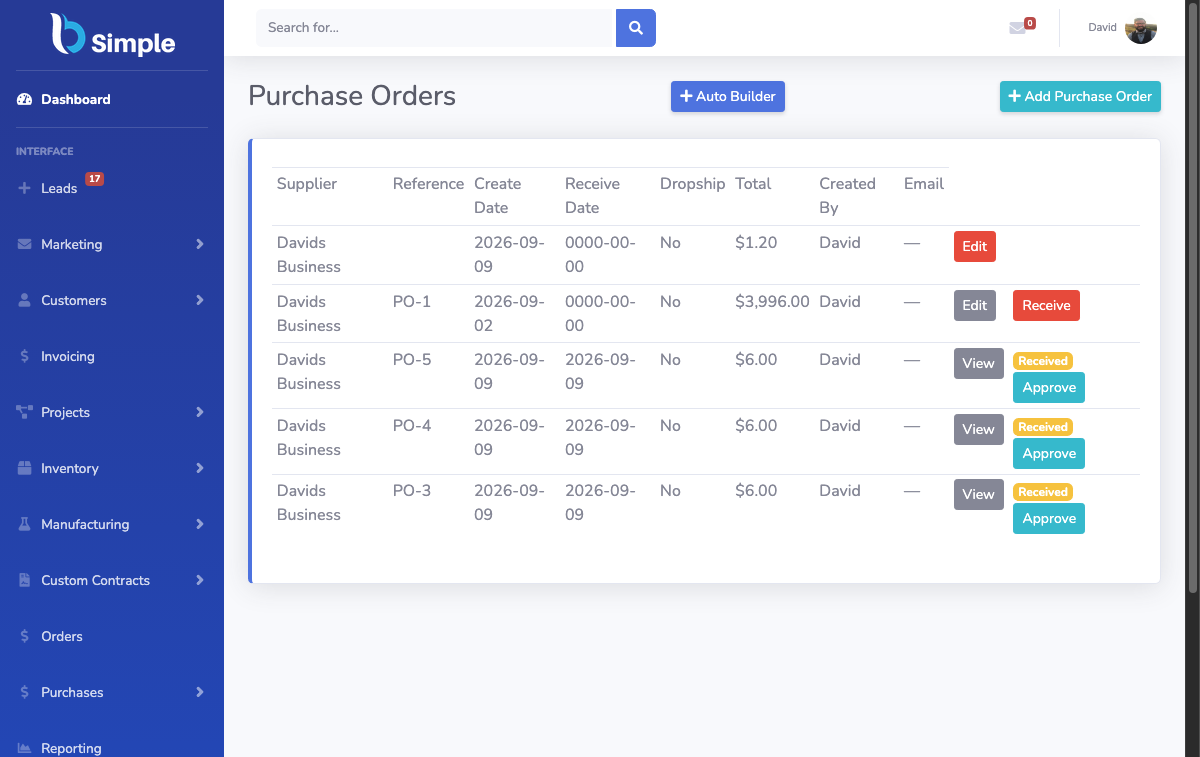
Keep the ledger where it is. Run operations on a system built for the job — in BSimple's case, one record across inventory, orders, purchasing, invoicing and a customer portal, with production depth (recipes, batches, traceability) for businesses that make things. Integration does the joining: approved invoices push to Xero or MYOB, payment status mirrors back, Shopify orders arrive by webhook, and a public REST API exposes stock and purchasing data to anything else you run.
The practical differences from an ERP project: setup measured in weeks; published pricing from $180/month (AUD) rather than negotiated suites; and replaceability — if the business outgrows the layer, the operational data exports rather than being trapped inside a monolith. The trade is honest too: no HR, no payroll, no MRP scheduling inside the system. Focused means focused. The business software comparison approaches the same decision from the SMB side.
The decision, in three questions
Is the accounting staying in Xero or MYOB? If yes, you want the focused architecture — a system that hands off cleanly rather than absorbing the ledger. Is complexity at entity-and-country scale, or volume scale? Entity scale points to ERP; volume scale points to better operations, not bigger platforms. Who will own the system internally? If the answer is "nobody has time", the ERP implementation will stall — the focused system is the one that survives.
What business management software covers fills in the category background, and the free trial is the focused approach's answer to the sales gauntlet: run your real products through the operational loop and judge in an afternoon.

Frequently Asked Questions
Is an enterprise management system the same as ERP?
Sometimes — some vendors use the labels interchangeably. Architecturally they can differ: ERP is one suite absorbing finance, HR and operations; the focused kind of EMS runs specific operational jobs and integrates with specialist systems like Xero or MYOB. Ask the vendor which architecture they sell.
Which is cheaper: ERP or an enterprise management system?
For SMBs, the focused approach, decisively. ERP carries licence, implementation and internal-ownership costs quoted only after a sales process; focused systems publish prices — BSimple starts at $180/month (AUD). At true enterprise scale the comparison changes, because the complexity ERP manages is real.
Can a focused system hand off to Xero or MYOB properly?
Yes — that is the architecture. BSimple pushes approved invoices to the accounting system and mirrors payment status back, so the ledger stays current without re-entry. The accountant keeps their system; the warehouse keeps one true record.
Will we outgrow a focused system?
Growing past an SMB operations layer is possible — usually signalled by multi-entity consolidation or MRP-grade scheduling needs, at which point ERP genuinely is the answer. Check the export story before adopting anything; data portability is what makes the focused path reversible.
How long does each approach take to implement?
Focused systems are operational in weeks: import products, connect accounting, train on one workflow. ERP projects run for months to years by design. If the operational pain is this quarter's problem, the timeline difference usually decides the question on its own.
BSimple