
Guide / staff tools, honestly
Free employee management software: the honest boundary
Employee management — rosters, leave, timesheets, payroll — is an HR category, and BSimple does not do it. Here is what free options exist for that job, and the part BSimple does play.
The straight answer
- Employee management means hiring, rosters, leave, timesheets and payroll — BSimple does none of those, and no page here will pretend otherwise.
- Free options for that job exist: spreadsheets for tiny teams, free tiers of HR platforms, and payroll via your accountant's preferred tool.
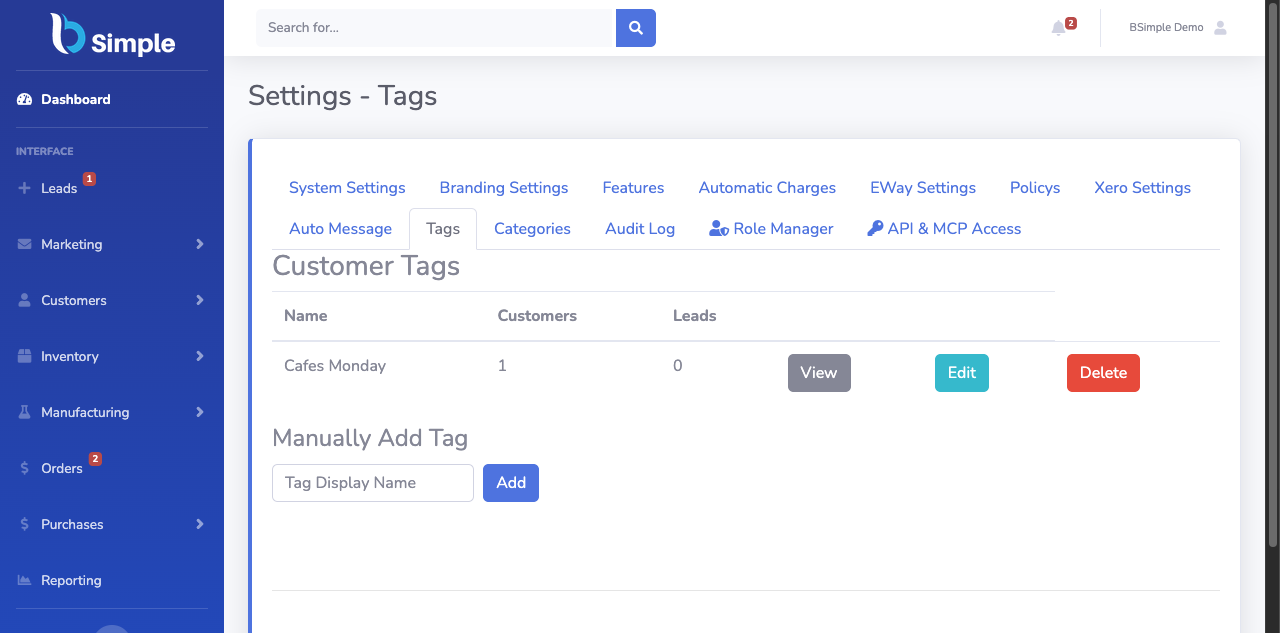
- Where staff touch BSimple: the operational record — staff work in the system, every action attributed, with an audit trail of who did what.
- The honest pairing: an HR platform for people, BSimple for product operations — most growing businesses need both.
- 01The straight answer
- 02The free options for the HR job itself
- 03Where staff meet BSimple
The free options for the HR job itself
The spreadsheet runs leave and rosters for a team small enough to fit on one page — genuinely free, genuinely fragile: one editor, no alerts, and compliance (leave accruals, awards) carried entirely by the human maintaining it. Free tiers of HR platforms cover leave requests, document storage and basic rosters with caps on employees — reasonable for early stages, worth mapping the cap before committing. Payroll in Australia usually lands with the accountant's preferred tool, and employee management decisions should anticipate that handoff rather than fight it.
What no free path covers is the operations those employees do: the stock they receive, the orders they pick, the purchases they raise. That is the other half of "managing employees" in a product business — not their leave, but their work — and it is the half that usually leaks money first.
Where staff meet BSimple
We build BSimple, so weigh that — as operations software for small-to-medium wholesale, manufacturing, distribution and trade businesses. Staff work in it daily: receiving against purchase orders, picking and packing orders, running stocktakes from any phone browser, raising purchase orders from demand. Every action is attributed — the audit trail shows who did what, so shrinkage and errors have authors rather than mysteries — and customers order themselves through their own portal, removing the dependency on whoever used to take the phone call.
The boundary, plainly: no rosters, no leave, no timesheets, no payroll — and no free tier; BSimple is paid from $180/month (AUD) with a free trial. The pairing that works: an HR platform for people compliance, BSimple for the operational record their work writes to. The inventory management overview shows that record, and the business software "best" criteria help you judge both categories on their own terms. The task-tracking half of the free question gets its own audit at free task management for small business.
Frequently Asked Questions
Does BSimple include rostering, leave or payroll?
No. Those belong to HR and payroll platforms — and in Australia, payroll usually to the accountant's preferred tool. BSimple is the operational system: stock, orders, purchasing, invoicing and the customer portal. A page claiming otherwise for this keyword would be wasting your time.
Can our staff all use BSimple?
Yes — staff work in the system from a browser, including phones on the floor, and every action is attributed in the audit trail. The point is accountability and continuity: records survive staff turnover, and new starters learn one workflow rather than a spreadsheet plus three inboxes.
Is there a free version of BSimple for small teams?
No — BSimple is paid from $180/month (AUD), with a free trial to test it on your own products. The distinction matters when planning: a free tier can be removed or capped; a trial is honest time to decide. For the no-licence end of the market, spreadsheets remain the honest free tool.
We need both HR and operations. What order?
Fix whichever is bleeding: if people compliance is the risk (payroll errors, leave disputes), HR software first. If money leaks through operations — overselling, re-keyed orders, unknown stock — the operational record first, because that is usually the bigger and quieter loss. Most businesses with more than a handful of staff eventually run both.

BSimple