
Guide / two order types
Customer order management vs service order management
They share a word and nothing else: one moves stock out the door, the other moves people to fix things. Here is what each needs from software, and where the two meet.
The short answer
- Customer order management is the sell-and-ship workflow: order → allocate → pick and pack → invoice → stock updated.
- Service order management is the fix-and-bill workflow: job or work order → schedule a person → parts and time → invoice → asset history updated.
- They differ in what the order promises: goods against stock versus labour against time.
- BSimple runs the customer side natively — and covers the service side where it touches stock, through its projects feature.
- 01The short answer
- 02Customer order management: the stock workflow
- 03Service order management: the people workflow
- 04Where BSimple fits
Customer order management: the stock workflow
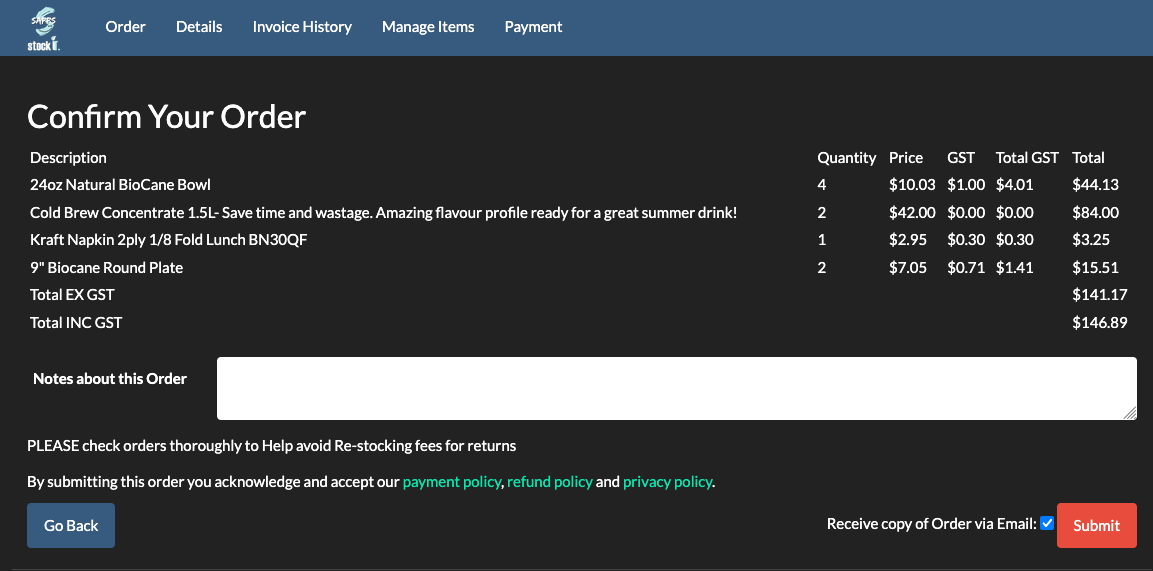
A customer order is a promise against inventory: units allocated from live stock, picked and packed, invoiced, quantities deducted. The system questions are all stock questions — can we fulfil this now, what did we promise, did the invoice match what shipped, and did purchasing cover what the order book consumed? The workflow's scorecard is fill rate and delivery dates, and its failure modes are overselling and stale records.
This is the workflow BSimple runs natively: orders allocate from the same live record purchasing feeds, pick and pack runs against the order, packing slips and invoices carry the same numbers, and the accounting handoff to Xero or MYOB finishes it. The order management overview walks it end to end, and the customer ordering portal covers the self-service entry point.
Service order management: the people workflow
A service order — a job, a work order, a callout — promises labour and outcomes: a technician on site, a fault fixed, a unit installed or maintained. Its system questions are scheduling and history: who is available, what parts the job will consume, what was done last time, what the warranty says. The scorecard is response time and first-time fix rate, and its failure modes are double-booked crews and jobs whose parts vanish from stock unrecorded.
Where service work touches stock — parts consumed on a job, equipment installed at a site, warranty and maintenance history per asset — the service workflow needs the same live record the sales workflow uses, or the van inventory becomes a second truth. BSimple's projects feature is the honest bridge here, and it does not claim the rest: no crew scheduling, no dispatch calendar, no job-queue automation — those belong to field-service software.
Where BSimple fits
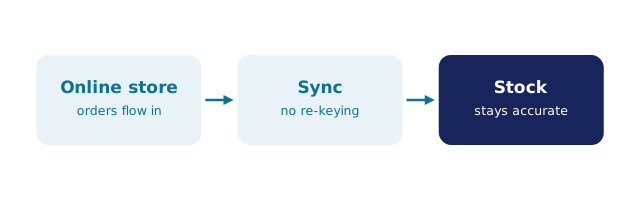
We build BSimple, so weigh that. On the customer side it is a complete order management system on one record with stock, purchasing and invoicing. On the service side it covers the stock-touching parts through projects: group inventory and on-site assets under a customer, reserve items for a job without consuming stock, install and consume on invoice approval, and keep warranty, maintenance and service history per job — the boom-gate-and-trade-job pattern.
The boundary, plainly: if dispatch scheduling and crew management are the core need, a field-service product is the right first tool, and BSimple will not pretend otherwise. If the need is one record behind both the orders and the jobs, the free trial is where to test it, and the order management systems list frames the alternatives.
Frequently Asked Questions
What is the main difference between the two?
What the order promises. A customer order promises goods against stock, so its system is a stock workflow. A service order promises labour against time, so its system is a scheduling-and-history workflow. They meet where jobs consume parts — which is exactly where having both on one record matters.
Can one system do both?
For product businesses whose service work is stock-centric — install, maintain, repair equipment you sold — one record works: BSimple handles the customer orders natively and the job side through projects, with reserve-without-consuming and per-job history. For labour-scheduling-heavy operations (field crews, rostered maintenance), a dedicated field-service system should lead, with the stock record behind it.
How does a service job consume stock without overselling?
Through reservation on the same record: parts reserved to a job stay visible and unavailable to other promises, and consumption happens when the job is invoiced and approved. That is the projects pattern — the van cannot promise units the warehouse already promised someone else.
Does BSimple schedule technicians?
No — no dispatch calendar or crew scheduling. BSimple records the job, its reserved and consumed stock, its invoices, and its warranty and service history. Scheduling people is a field-service product's job; keeping the stock and history truthful is BSimple's.
BSimple