
Guide / cloud inventory
Cloud-based inventory systems, explained plainly
One live stock record your whole team can reach from anywhere — and what to check before you trust a cloud system with yours.
What "cloud-based inventory" actually means
A cloud-based inventory system keeps your stock record on hosted servers and serves it through a browser. Every user — you, your warehouse staff, your bookkeeper — works on the same live record from wherever they are, and every movement (an order, a delivery, a count) updates that record immediately.
The alternatives have the same parts but worse physics: a spreadsheet on one computer is a cloud system with the cloud removed, and on-premise server software is the same with an IT contractor added. The record is the point; the hosting just decides who can touch it and when.
- 01What "cloud-based inventory" actually means
- 02What changes for the business
- 03What to check before moving your stock to the cloud
- 04Moving is easier than it sounds
What changes for the business
- Anyone, anywhere, same numbers. The office sees the same quantities the warehouse sees. Owners see it from home or their phone.
- No installs, no backups to forget. Updates, hosting and backups are the vendor's job. A new computer is not a migration project.
- Everything is one record. Orders, purchases, invoices and counts all move the same stock numbers — which is what kills the end-of-week reconciliation ritual.
- Growth without re-platforming. Add a location, a customer ordering portal, barcode scanning or production tracking without replacing the system.
- The wider system: inventory management end to end maps the whole record this page sits in.
What to check before moving your stock to the cloud
- Accounting handoff. The system should push invoices and mirror payment status into your accounting platform. See how the BSimple ↔ Xero boundary works.
- Who can see what. Look for role-based access and an audit trail — BSimple records every transaction and keeps customer access limited to their own ordering portal.
- The honest limits. Cloud means an internet connection is required, and "hosted" does not mean "your accountant's compliance is included" — BSimple handles operations while Xero, MYOB or QuickBooks stays the accounting system of record.
- Cost shape. A subscription sized to your business, without module fees for core features. BSimple plans start at $180/month AUD with inventory, orders, purchasing, invoicing and the customer portal included.
Moving is easier than it sounds
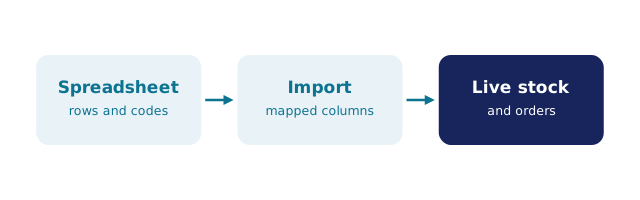
The migration is a stocktake: load your products, count what you actually have, and start recording movements in the system from that day forward. BSimple imports your product list, works alongside your spreadsheet while you switch over, and the free trial lets you rehearse the whole thing before you commit. For the same decision from other angles, the cloud-based system comparison and the web-based open-source options are the honest companion reads.
Frequently Asked Questions
Is cloud inventory software secure for business data?
Reputable cloud systems isolate each business's data, keep audit trails, and back up continuously — which is more than most office spreadsheets can claim. BSimple adds tenant isolation and a full transaction history, so you can always answer who changed what.
What happens if the internet goes down?
You need a connection to reach a cloud system — that is the honest trade. In practice, the same connection your POS, email and banking already depend on covers it, and records catch up the moment you are back online.
Can my supplier and customer records come across?
Yes. BSimple imports contacts from your accounting system (selectively, so you bring across the customers and suppliers you actually trade with) and your product list from a spreadsheet. See inputting your first orders for how the workflow feels.

BSimple