
Guide / the hazmat boundary
Chemical inventory software: the honest boundary
Hazardous-goods compliance is a regulatory discipline with specialist systems. Where chemical distributors and formulators fit on BSimple's record is stated plainly here.
The straight answer
- Regulated chemical management — SDS registers, GHS labelling, exposure and dangerous-goods compliance — needs specialist systems BSimple does not provide.
- What BSimple can serve: businesses handling chemicals as products — distribution, formulation, supply — where batch, expiry and traceability are the core.
- The line is regulatory accountability: know which side of it you are on before trialling anything.
- Where BSimple plays: batch tracking with expiry, two-way traceability, purchasing and invoicing on one record, from $180/month (AUD).
- The full picture: how the inventory record works is the hub page for everything above.
- 01The straight answer
- 02The two jobs the word "chemical" hides
- 03Where BSimple fits
The two jobs the word "chemical" hides
The compliance job: safety data sheets, GHS labelling, dangerous-goods classes, storage-segregation rules, exposure registers, spill reporting. That is a regulated discipline with specialist EHS software built for it, and the consequences of getting it wrong are not commercial — they are safety and legal. BSimple does none of it, and an inventory page that implied otherwise would be the worst kind of overreach.
The product job: chemicals and formulations moving through a supply chain — raw materials received by lot, blends produced in batches with use-by dates, products shipped to customers who ask "which lot was in my order?". This is distribution and production with sharpened traceability: exactly what batch and lot tracking exists for. Formulators in cosmetics, cleaning products and food ingredients live on this side of the line, and the record they need is the same one any traced product business needs — with higher stakes on the expiry and recall answers.
Where BSimple fits
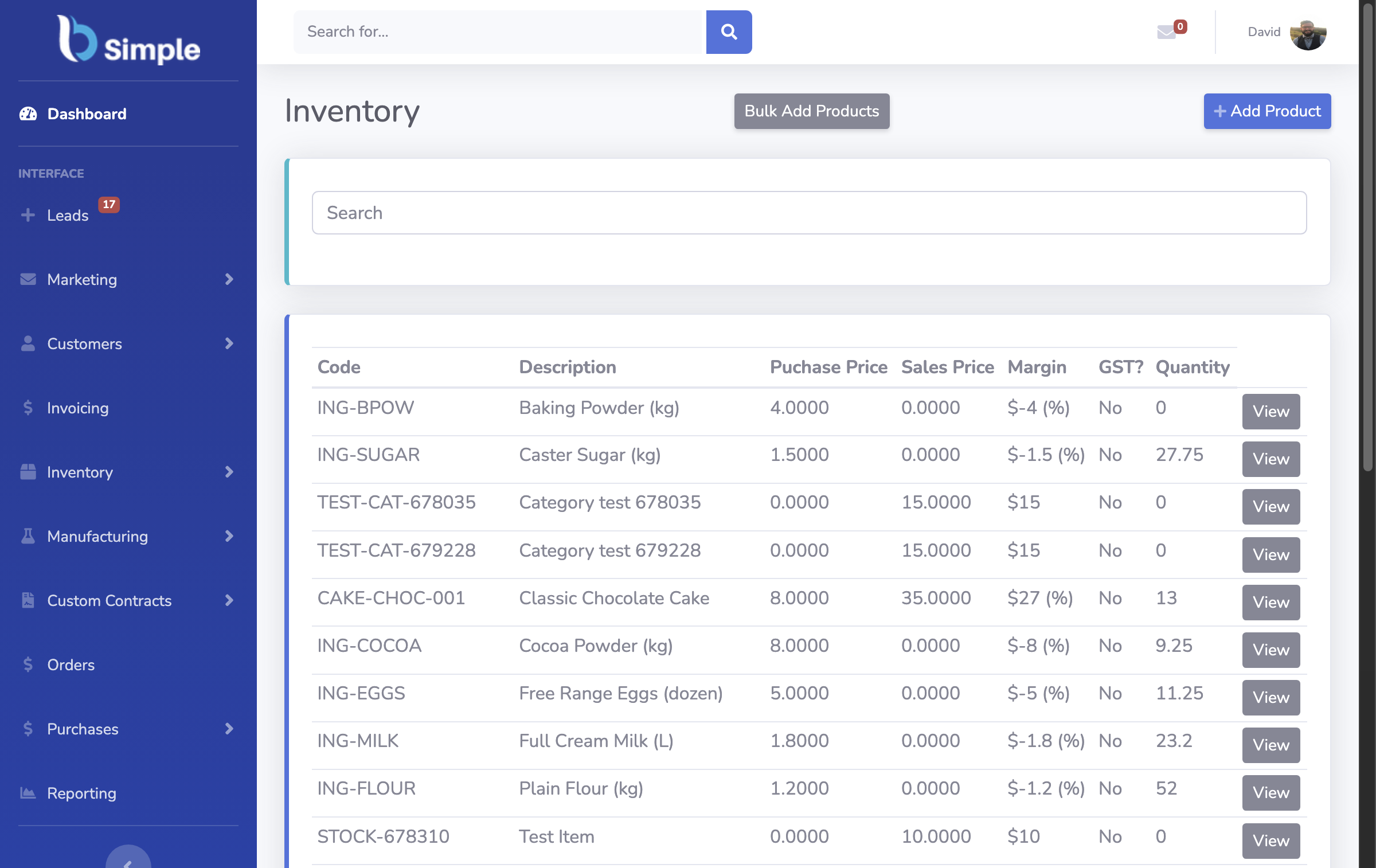
We build BSimple, so weigh that. For chemical suppliers, blenders and formulators on the product side it runs the full loop: raw materials received by lot with expiry dates, recipes with multi-level bills of materials for blending, production runs creating traced batches, traceability search in both directions — supplier lot to customer, complaint back to lot — live multi-location stock, purchase orders from demand, a customer ordering portal, invoicing handed to Xero or MYOB, and mass-balance reporting for certified operations (ACO, NASAA and OFC are cited by existing customers). From $180/month (AUD), with the free trial to run one real lot through.
The boundary, restated: no SDS management, no GHS labelling, no dangerous-goods class tracking, no exposure registers. Pair BSimple with your EHS compliance process; never instead of it. Batch tracking software details the traceability layer, the lab inventory page the adjacent lab boundary — and where the stock is instruments rather than ingredients, free asset inventory covers the other half.
Frequently Asked Questions
Does BSimple manage SDS and GHS compliance?
No — safety data sheets, GHS labelling and dangerous-goods compliance belong to specialist EHS systems. BSimple tracks the products and their lots; it does not carry regulatory safety accountability, and no page here will imply it does.
Can BSimple track chemical lots and expiry?
Yes — batch and lot tracking with expiry dates is core: receipts carry lot detail, the record shows which lots are active and which expire first, and traceability search runs both directions for recalls and customer questions.
We blend chemicals into products. Does that fit?
The production side fits: recipes with multi-level bills of materials, production runs with shortage checks, batches with use-by dates as outputs. The compliance side of handling hazardous inputs stays with your EHS process — the record supports it; it does not replace it.
Is there a free option for chemical stock?
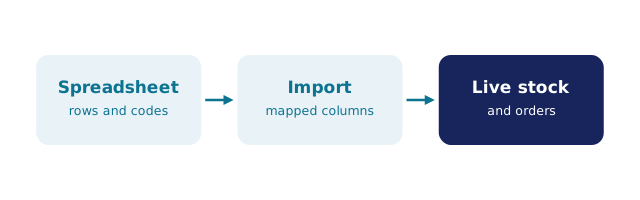
A spreadsheet with lot and expiry columns covers a small, non-regulated store room. For traced supply chains and production, the paid record is where the traceability lives — the trial is the honest way to see it on your own lots before paying.
BSimple