
Guide / two readings
Business management application "in architecture" — both readings
This search means two different things: software to run an architecture practice, or the architecture of a business management application. Both answered — with BSimple's honest place in each.
The key facts
- Reading 1 — software for architecture firms: practices need timesheets, job costing and document control; BSimple is deliberately none of those, and says so.
- Reading 2 — application architecture: the structure of a business management app — modules over one record, movements over mutable totals, a reviewable boundary with accounting.
- Where BSimple genuinely fits architecture practices: if the practice supplies or installs physical product (joinery, fixtures), the operations record applies.
- The boundary, plainly: no timesheets, no project-portfolio management, no CAD/document handling.
- 01The key facts
- 02Reading 1: software to run an architecture practice
- 03Reading 2: the architecture of a business management application
- 04Which reading was yours?
Reading 1: software to run an architecture practice
An architecture practice's core systems are about professional time and deliverables: timesheets feeding job costing, project stages, document and drawing control, and invoicing against professional fees. That is a different product category from operations software — and BSimple will not pretend otherwise. There is no timesheet module, no project-portfolio board, and no drawing register here; a practice management platform is the honest answer for that need.
The overlap is real but narrow: practices that supply and install physical things — joinery runs, fixture packages, equipment through a client fit-out — carry a stock-and-installation problem alongside the professional one. That slice (items reserved for a job, installed and consumed on approval, with a service history per client) is what BSimple's project layer handles for trade businesses of all kinds. If the practice is essentially products-plus-projects, worth a look; if it is fees-plus-timesheets, it is not.
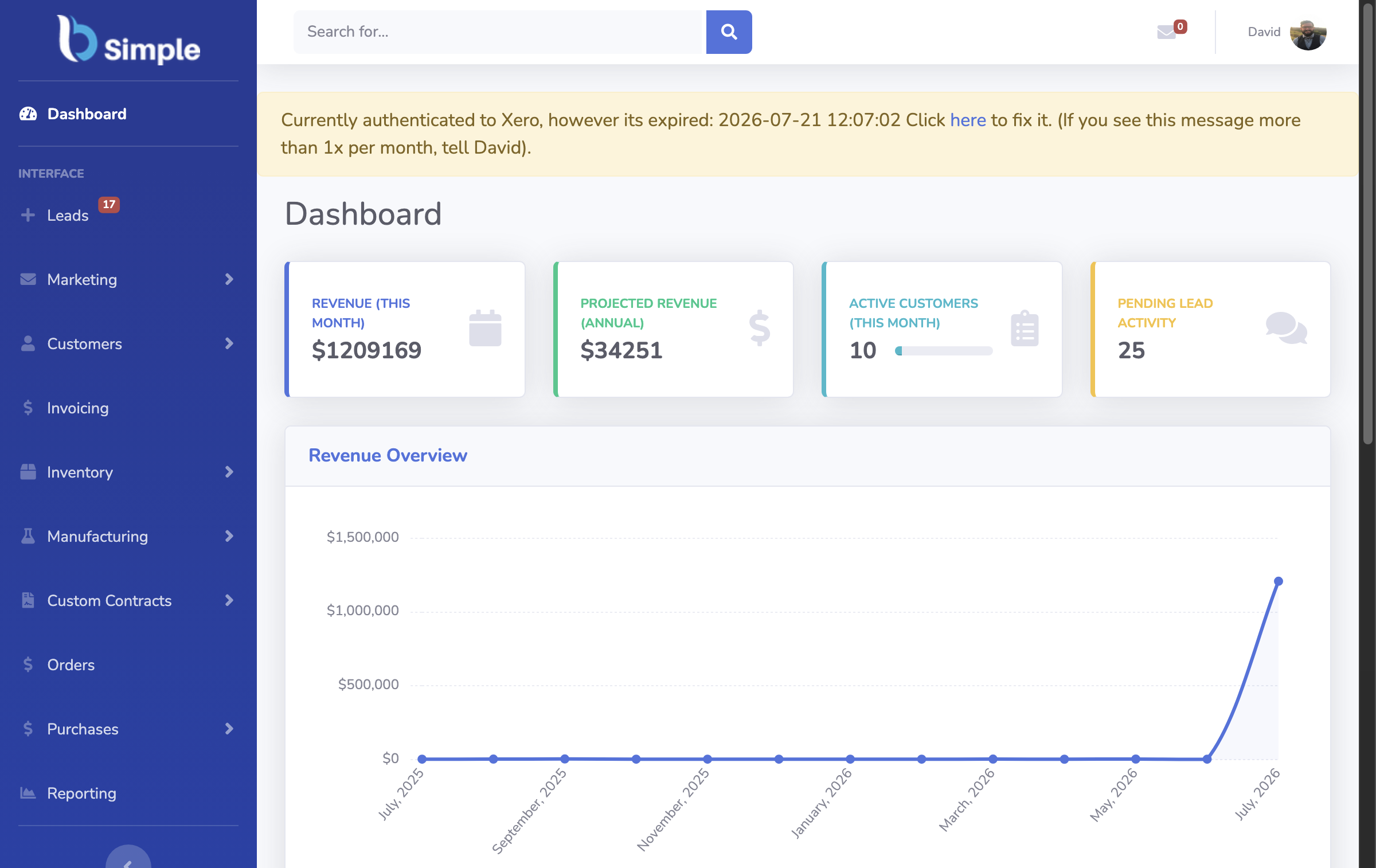
Reading 2: the architecture of a business management application
For the systems-design reading, the sound architecture repeats three decisions: one record, many modules — inventory, orders, purchasing, invoicing all read and write the same data rather than syncing between their own databases; movements, not mutable totals — quantities are derived from an append-only movement history, which is what makes audits, concurrency and "why does it say 3?" answerable; and a deliberate accounting boundary — the operational system holds live truth and hands reviewed records to the accounting system, rather than the two masters drifting.
Around those decisions sit the unglamorous load-bearers: an audit row for every change, tenant isolation if multi-tenant, role-based access, and an API that exposes read projections (BSimple's public REST API exposes suppliers, locations, PAR levels, reorder views, stocktakes and transfers — with scoped keys). The system diagram and the ER-diagram angle draw this out further.

Which reading was yours?
If it was the practice-management one: the honest route is a practice platform, and this page will not waste your time pretending BSimple covers timesheets. If your business sits in the products-plus-projects overlap — or you are a wholesaler or manufacturer supplying architectural jobs — the trial runs the operations record on your items in an afternoon. And if you were here for the system design, the inventory guide is the best next read.
Frequently Asked Questions
Does BSimple suit architecture or design practices?
Only where the practice supplies and installs physical product. Professional practice management — timesheets, fee billing, drawing control — is a different category, and we say that plainly rather than stretch the product over it.
What is the typical architecture of a business management app?
Modules over one shared record, a movement-based (append-only) stock model with derived quantities, an audit trail on every change, role-based access, and a one-way reviewed handoff into the accounting system. Everything else is interface.
Why are movements better than storing current quantities?
Because questions run backwards: "why 3?", "who changed it?", "what did we count last?" — all answered by replaying movements. A mutable total answers none of them and breaks silently under two users.
What does BSimple's project layer actually do?
It groups inventory and on-site assets under a customer for lifetime management: reserve items without consuming stock, install and consume on invoice approval, and keep warranty or service history per job — built for trade installations, not for portfolio management.
Can we trial it for a products-plus-projects practice?
Yes — the trial is the full product. Load the items you actually supply, set up one client project, and see whether the reserve-install-consume path matches how your jobs really run.

BSimple