App To Scan Barcodes For Inventory That Delivers Results

  • Real-time barcode scanning with offline capability and automatic synchronisation when connectivity returns
  • Seamless Xero integration automatically syncing inventory adjustments to accounting records without manual entries
  • Negative inventory tracking for pre-allocated stock and production planning scenarios
  • Automated purchase order generation triggered by minimum stock thresholds and reorder points
  • Customer ordering portal displaying live stock levels updated by barcode scanning activities
  • Cycle counting and stocktake management reducing year-end reconciliation time significantly
  • Mobile-first design working on standard smartphones and tablets without expensive dedicated hardware

Running a wholesale, manufacturing, or distribution business means you’re constantly juggling stock levels, customer orders, and the pressure to get products out the door on time. A barcode scanning app for inventory isn’t just a nice-to-have anymore—it’s essential infrastructure for staying competitive. The right app transforms how your team tracks stock, reduces manual data entry errors, and gives you real-time visibility into what’s actually on your shelves.

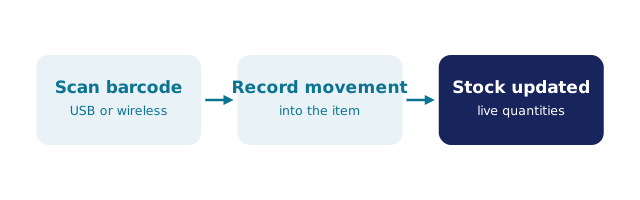
Most Australian SMBs still rely on spreadsheets and manual counts, which is honestly a recipe for disaster. You lose track of stock movements, customer orders pile up, and your accountant has a nightmare during EOFY stocktakes. A dedicated barcode scanning app eliminates these headaches by automating the entire process. When your warehouse team scans a barcode, the inventory updates instantly across your entire system. No more wondering if that Melbourne brewery’s latest shipment has been logged. No more double-counting stock during year-end reconciliation.

The beauty of modern barcode scanning solutions is that they integrate seamlessly with your existing tools. If you’re using Xero for accounting—and most Australian businesses are—your inventory app should talk to it automatically. This means your stock movements automatically sync with your financial records, making GST compliance and stocktake management significantly easier. BSimple’s Xero integration handles this behind the scenes, so your team focuses on what matters: fulfilling orders and growing the business.

Beyond the basic scanning functionality, the best apps give you strategic insights. You’ll see which products move fastest, identify slow-moving stock before it becomes dead weight, and optimise your purchasing patterns. For a Sydney coffee roaster managing dozens of SKUs across multiple locations, this visibility is invaluable. You can implement just-in-time inventory practices that keep cash flow healthy while ensuring you never run out of bestsellers.

Why Barcode Scanning Matters For Your Business

The pain of manual inventory management hits different when you’re managing wholesale operations. You’ve got inbound stock to receive, outbound orders to pick and pack, and regular stocktakes that take days to complete. A barcode scanning app streamlines every single one of these processes, turning what used to be a tedious chore into a few quick taps on a mobile device.

When a delivery arrives at your warehouse, your team simply scans the barcodes on each carton. The app records the received quantity, updates your stock levels, and flags any discrepancies between what the invoice says and what actually arrived. This catches supplier errors immediately rather than discovering them weeks later when a customer complains they received the wrong item. For manufacturing businesses, this is equally critical—you need to know exactly what raw materials you have on hand to plan production runs accurately.

The real game-changer is how barcode scanning eliminates the need for those painful full-facility stocktakes. Instead of closing your warehouse for a day and counting everything manually, your team conducts rolling cycle counts throughout the year. They scan sections of inventory whenever convenient, and the app compares actual stock to what your system thinks you have. If there’s a variance, you investigate and correct it immediately. By EOFY, your records are already accurate, making the final reconciliation a breeze. Proper inventory management isn’t just about knowing what you have—it’s about maintaining confidence in your data all year round.

Distribution businesses benefit enormously from this approach. When you’re moving stock between multiple locations or fulfilling customer orders from various warehouses, barcode scanning ensures nothing gets lost in transit. Your customers see accurate stock levels on their customer ordering portal, so they don’t place orders for items you can’t actually supply. This builds trust and reduces the admin burden of managing backorders and cancellations.

Negative Inventory And Advanced Stock Management

Negative inventory tracking might sound like an odd feature, but it’s genuinely useful for real-world operations. Sometimes you need to allocate stock to customer orders before physical goods arrive from your supplier. Or you might need to reserve materials for a specific manufacturing run. A barcode scanning app that supports negative inventory lets you manage these scenarios without your system throwing errors or preventing legitimate business operations.

Here’s a practical example: a Melbourne brewery receives a large order from a major retailer. The stock hasn’t physically arrived yet, but you’ve committed to the sale and need to reserve it. Traditional systems would prevent you from doing this. BSimple’s approach handles negative inventory tracking, so you can allocate the stock and your system automatically reconciles when the goods arrive. Your team scans the incoming shipment, and the negative balance becomes zero—everything balances perfectly.

This flexibility extends to manufacturing scenarios too. If you’re producing goods and need to allocate raw materials to production batches before those materials are physically consumed, negative inventory tracking keeps your system accurate. Your team can scan materials as they’re used in production, and the app deducts them from your allocated stock. This gives manufacturing businesses the visibility they need to manage production schedules without constantly worrying about whether the system will accept their transactions.

The integration with automated PO generation makes this even more powerful. As stock levels drop—whether positive or negative—the system can automatically trigger purchase orders to your suppliers. A Sydney coffee roaster managing espresso bean inventory across multiple locations can set minimum stock thresholds. When any location drops below the threshold, the system generates a PO automatically. The roaster’s purchasing manager reviews and approves it, then the order goes to the supplier. No more frantic calls wondering if you’ve ordered enough stock for next week.

Real-Time Inventory For Customer Ordering Portals

Customer ordering portals have transformed how wholesale businesses operate, and barcode scanning apps are the backbone that makes them work reliably. When your customers log into their portal to place orders, they’re seeing real-time stock levels. If that information is wrong because your inventory tracking is manual or delayed, customers will order items you don’t have. This creates backorders, disappointed customers, and admin chaos trying to manage exceptions.

With a barcode scanning app feeding accurate data into your system, your customer portal shows exactly what’s available right now. A customer in Brisbane ordering from your Sydney warehouse sees live stock levels. They can place their order knowing it’ll be fulfilled immediately. No surprises, no delays, no awkward conversations about stock availability. For wholesale distributors, this reliability builds customer loyalty and reduces the time your team spends managing order queries.

The scanning app also makes it easier to process orders once they come in. Your warehouse team receives the order notification, picks the items by scanning barcodes to confirm they’re grabbing the right products and quantities, and packs everything for shipment. The system automatically generates picking lists, tracks what’s been picked, and prevents errors where the wrong item ends up in a customer’s box. Australian businesses operating on tight margins can’t afford these mistakes—they damage customer relationships and eat into profitability.

Integration with Xero means that when your team scans items as they’re picked and packed, the stock adjustment happens automatically in your accounting system. Your financial records stay current without manual journal entries. This is particularly important for businesses managing GST, as your stock values flow through to your tax position. A manufacturing business doing their EOFY reconciliation will have accurate stock values already recorded, making the auditing process straightforward.

Just-In-Time Inventory Made Practical And Profitable

Just-in-time inventory practices sound sophisticated, but they’re really just about ordering stock when you need it rather than holding excess inventory that ties up cash. A barcode scanning app makes this viable for Australian SMBs by giving you the visibility and automation needed to execute JIT successfully. You can’t operate JIT if you don’t know exactly what you have on hand and how fast it’s moving.

Let’s say you’re a manufacturing business producing custom components. You need raw materials delivered just before they’re needed in production. Order too early and you’re holding expensive inventory; order too late and production stops. A barcode scanning system tracks material consumption in real-time. As your team scans materials into production, the app records the deduction. When stock reaches your reorder point, the system can automatically generate a purchase order to your supplier with a delivery date timed to arrive just before you need it.

This approach dramatically improves cash flow. Instead of funding months of inventory sitting in your warehouse, you’re only paying for materials when you’re about to use them. For wholesale distributors, JIT means you can offer customers faster delivery times without maintaining massive stock levels. You receive orders, immediately purchase from your suppliers, and drop-ship directly to customers. The barcode scanning app ensures accuracy throughout this process—you’re not over-committing stock or under-delivering on orders.

The environmental benefits are worth mentioning too. Australian businesses increasingly care about sustainability, and JIT inventory reduces waste. You’re not holding slow-moving stock that eventually gets written off as obsolete. You’re not over-producing and then struggling to sell excess inventory. A barcode scanning app supporting just-in-time inventory management helps you operate more efficiently and responsibly. Combined with accurate stocktake management and real-time visibility, you’re building a lean operation that responds quickly to market demand while minimising environmental impact.

Frequently Asked Questions

Can a barcode scanning app work offline?

Most modern barcode scanning apps, including BSimple, work offline and synchronise data when connectivity returns. Your team can scan barcodes throughout the day, and the app queues transactions. Once you’re back online, everything syncs to your central system automatically.

Do I need special equipment to scan barcodes?

No. Modern barcode scanning apps work on standard smartphones and tablets using their built-in cameras. You don’t need to purchase expensive dedicated scanners. This makes implementation quick and cost-effective for Australian SMBs.

How does barcode scanning improve stocktake accuracy?

Barcode scanning eliminates manual counting errors and creates an audit trail of every stock movement. During stocktakes, you scan items as you count them, and the app immediately compares actual quantities to recorded levels. Discrepancies are highlighted for investigation.

Can I use barcode scanning with my existing Xero accounting?

Yes. BSimple integrates seamlessly with Xero, automatically syncing inventory adjustments to your accounting records. Stock movements update your financial position in real-time without manual journal entries.

What happens if a product doesn’t have a barcode?

You can create barcodes within the app for products without existing codes. The system generates printable labels that you apply to items. This is particularly useful for custom or manufactured products.

How does barcode scanning help with customer ordering portals?

Accurate barcode scanning keeps inventory data current, so your customer portal shows real-time stock levels. Customers see exactly what’s available, reducing backorders and order errors.

Is barcode scanning suitable for small businesses?

Absolutely. Barcode scanning apps scale from small operations to large distribution centres. Even a small wholesale business benefits from improved accuracy and reduced manual data entry.