
Guide / switching order tools
Alternatives to Zoho order management: how to choose well
We will not grade a competitor from the sidelines. Instead: why teams search for alternatives, the checklist that makes any switch safe, and an honest note on where BSimple fits.
The honest framing
- We do not score Zoho here — no second-hand feature tables, no invented gaps. Vendor products change too fast for that to be honest.
- What this page gives you: the real reasons teams switch order tools, a migration checklist that works regardless of destination, and BSimple's fit stated plainly.
- The search itself is a signal: something in the current setup — scope, accounting handoff, support, price — is pinching. Name it before shopping, or any tool will inherit it.
- The wider flow: how order management works maps the full path this page is part of.
- 01The honest framing
- 02Why teams go looking for alternatives
- 03The migration checklist that works for any switch
- 04Where BSimple fits
Why teams go looking for alternatives
Switching searches rarely start with a missing feature — they start with a pinch. The recurring ones, from years of hearing them: the accounting seam — orders in one system, invoices re-keyed into another, and nobody trusting either; scope drift — the tool grew from order-taking toward something larger, and the business is paying for surface it never touches; the workflow gap — orders taken but not tied to picking, packing and stock, so the warehouse works from copies; support distance — answers in other time zones, from people who have never seen the product run.
Those pinches are architecture questions, and they survive a change of vendor unless they are asked directly. An alternative that re-creates the same seams is a re-keying exercise with a new logo.
The migration checklist that works for any switch
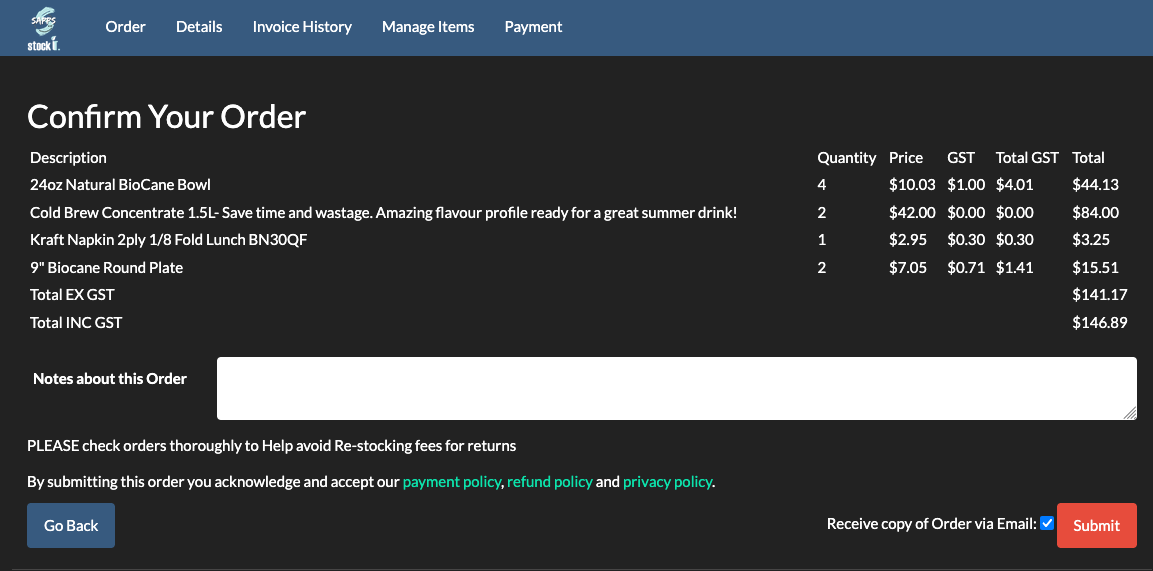
Export before you commit. Get your products, customers and open orders out of the current tool in a usable format before signing anything — it tests the exit as well as the entrance. Run the one-record test. Ask the candidate to demonstrate stock, orders and invoices as one record, not synced modules. Test the accounting handoff with real invoices. A push to Xero or MYOB on approval, with payment status mirrored back, is the standard — watch it happen live. Rehearse the exceptions: a partial shipment, a backorder, a cancellation. Trial with your own data, not the vendor's demo set — BSimple's free trial exists for exactly this.
Then switch in stages: run the new tool on live orders before cutting over history, and keep the old system readable for a season. A migration that must happen in one weekend is a migration that will be repeated.
Where BSimple fits
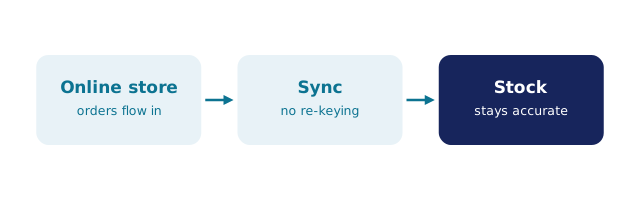
We build BSimple, so weigh that. It suits teams whose pinch is the seam between orders and everything else: stock, orders, purchasing and invoicing on one record, a customer ordering portal with per-customer pricing, pick and pack on the same record, and the accounting handoff to Xero or MYOB with US integrations rolling out — from $180/month (AUD). If your pinch is specifically order-centric, what order management software covers shows how BSimple treats the order as the spine of the record.
The boundary: BSimple is not an all-in-one suite in the Zoho sense — no HR, no payroll, no built-in ecommerce storefront (Shopify orders sync in; the storefront stays where it is). It is deliberately narrower, deeper on the stock-and-orders core. For order-tool comparisons beyond us, the order management systems list keeps the same honest frame.
Frequently Asked Questions
Why does this page avoid comparing Zoho feature by feature?
Because vendor feature tables rot, and second-hand comparisons rot faster. A checklist built on architecture questions — one record, accounting handoff, exceptions, exit — stays valid across any two products and puts your own trial data ahead of anyone’s marketing, ours included.
Is BSimple a Zoho alternative?
For the stock-and-orders core of a wholesale, manufacturing, distribution or trade business — yes, that is the job it does, from $180/month (AUD). As a general all-in-one suite with CRM, HR and campaign tools — no, and it will not pretend otherwise. Matching the pinch to the scope is the whole decision.
How long should a migration take?
The import is days; the switch is a staged season. Export cleanly, trial with your own catalogue and orders, run the two systems in parallel briefly, then cut over — keeping the old tool readable afterwards. Teams that budget a weekend usually budget twice.
What data should we move first?
Products and customers to start, open orders when the trial proves the workflow. Historical closed orders rarely need to move — the old system stays readable for lookup. Moving less, sooner, beats moving everything late.

BSimple