
Guide / operations models
Operations management models, tools and how software implements them
The textbook models are decision rules — how much to buy, when to buy, what to count. Here is what each one does, and what software like BSimple actually implements.
The models, in one view
- Reorder point (ROP): the level that triggers a purchase order — demand during lead time plus safety stock.
- Safety stock / par levels: the buffer that absorbs demand spikes and late deliveries.
- ABC analysis: rank items by value or velocity; count and manage A items hardest.
- EOQ: the classic formula for order quantity balancing ordering and holding costs.
- JIT: buying close to need to cut holding costs — safe only with reliable suppliers and live data.
- 01The models, in one view
- 02The decision rules, and what software implements them
- 03The tool layer: what to actually run these on
The decision rules, and what software implements them
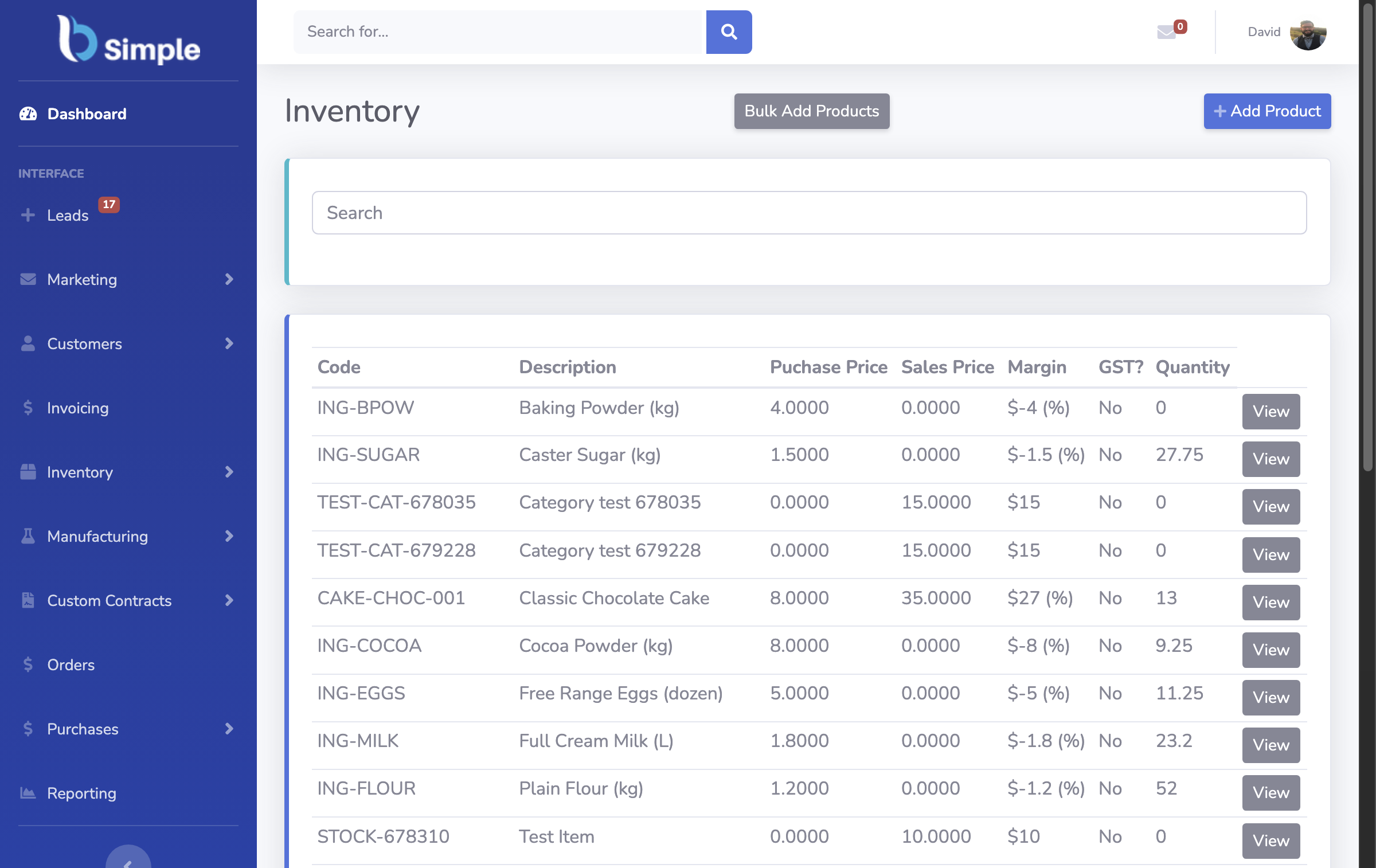
Reorder point and safety stock are the workhorses. Software implements them as reorder and par levels: set the level, and demand signals the buying side when quantities dip — a purchase order can be raised from that signal instead of from a shelf glance. The textbook formula (average demand over lead time, plus buffer) is something you calculate when setting the level; the system then enforces it continuously, which is the part spreadsheets never hold.
ABC analysis is a ranking discipline: a small share of items carries most of the value, so count A items often, B sometimes, C rarely. Software contributes by making the data available — reporting views over values and movement — and by making cheap counts possible at all: cycle counts from a phone browser turn "count the A items monthly" from a project into a habit.
EOQ and JIT are policies more than features. EOQ balances ordering cost against holding cost to suggest a quantity; JIT buys close to need to shrink inventory. Both depend on data quality: lead times, demand history, live quantities. This is where honesty about software matters — BSimple implements levels, guardrails and reporting; it does not claim MRP scheduling or automated demand forecasting, and a vendor that waves at "AI optimisation" should be asked to show the reorder decision working.
The tool layer: what to actually run these on
The models are decision rules; tools are what keep the inputs true. A model fed stale quantities optimises fiction. The tooling stack, in order: one live record — quantities that update as goods move, so the model acts on reality; movement history — so lead times and demand patterns are observed rather than guessed; guardrails — negative-stock protection so exceptions surface instead of hiding; reporting views — so ABC-style rankings are a query, not a modelling exercise; the accounting handoff — so purchasing decisions reconcile against what was actually paid.
BSimple supplies that layer for small-to-medium wholesale, manufacturing, distribution and trade businesses: reorder and par levels, purchase orders from demand, multi-location quantities, batch tracking, reporting views, and the handoff to Xero or MYOB — from $180/month (AUD) with a free trial. The models remain yours to set; the software's job is making the inputs worth modelling. The inventory management overview shows the record, the procurement pairing covers the buying side, and operations management tools and techniques catalogue the wider toolkit.
Frequently Asked Questions
Does BSimple calculate EOQ or forecast demand?
No — BSimple does not claim EOQ calculation or demand forecasting. It implements the enforcement layer: reorder and par levels you set, purchase orders raised from demand signals, live quantities and history so your own calculations have honest inputs. The distinction matters when comparing vendors.
Which model should a small business start with?
Reorder points on the items that hurt — the SKUs whose stockouts cost sales. ABC-style, start narrow: the top movers get levels first, the tail follows. A reorder level enforced by software beats a sophisticated model maintained by nobody, which is the practical ordering of these tools.
How does ABC analysis work in practice?
Rank items by annual value or velocity, split roughly 80/15/5 into A, B and C, then manage by class: frequent cycle counts and tight levels on A, periodic attention on C. The software contribution is data and cheap counting — reporting views for the ranking, phone-based counts for the discipline.
Is JIT realistic for small businesses?
Partly. Buying close to need cuts holding costs but transfers risk to suppliers; it works where suppliers are local and reliable and the record is live. For most SMEs the realistic version is tighter safety stock plus enforced reorder levels — JIT ambitions, implemented as levels the system actually watches.
BSimple