Inventory Management System Vs Warehouse Management System Built for Your Industry
Inventory Management System Vs Warehouse Management System designed for wholesale and manufacturing. Xero integration, customer portals, automated purchasing...
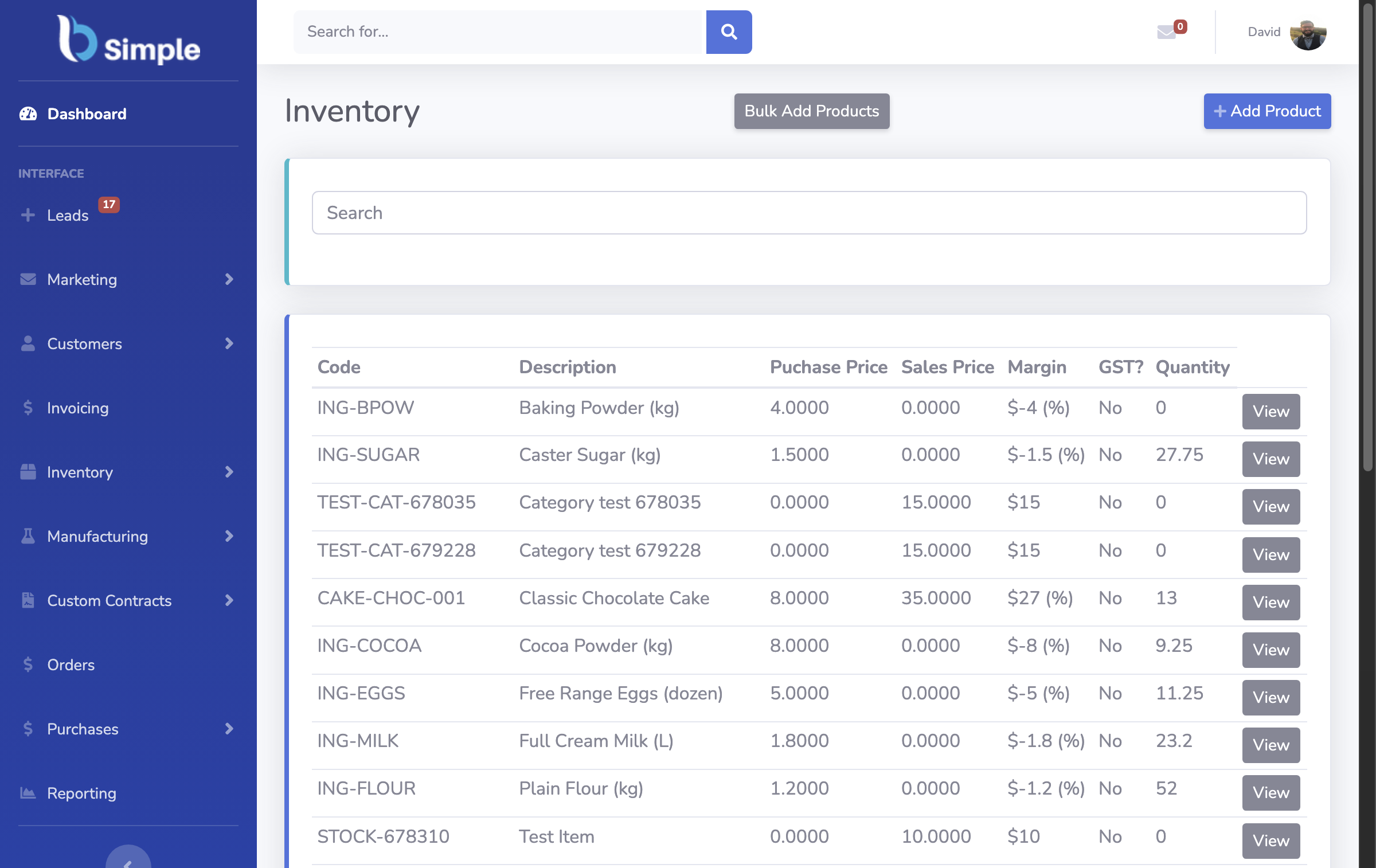
- Real-time stock level tracking across multiple warehouse locations with instant visibility
- Automated purchase order generation triggered by safety stock thresholds and reorder points
- Seamless Xero integration for financial accuracy and EOFY stocktake compliance
- Customer ordering portals allowing direct stock checking and order placement by clients
- Negative inventory alerts and just-in-time inventory capabilities for efficient cash flow management
- Barcode scanning and stocktake management tools simplifying physical inventory counts
- Comprehensive reporting and analytics for informed purchasing and inventory decisions
Understanding the difference between an inventory management system and a warehouse management system is crucial for Australian wholesale, manufacturing, and distribution businesses looking to optimise operations — explore our Inventory Management Software to see how these concepts work together in practice. For a deep dive into the warehouse side, our warehouse management software guide is the perfect companion. While the terms are often used interchangeably, they serve distinctly different purposes in your supply chain. An inventory management system (IMS) focuses on tracking stock levels, quantities, and product information across your entire business, while a warehouse management system (WMS) is specifically designed to optimise the physical movement and storage of goods within a warehouse environment. For many Australian SMBs — whether you're a Sydney coffee roaster managing bean stock or a Melbourne brewery tracking fermentation batches — the distinction matters significantly. Most small to medium-sized businesses don't need a full enterprise WMS; instead, they benefit from a robust inventory management system that handles stock visibility, automated reordering, and integration with accounting software like Xero. BSimple recognises this reality. Our platform bridges the gap by providing comprehensive inventory management capabilities without the complexity and cost of traditional warehouse management systems. We've built features specifically for Australian businesses: EOFY stocktake management, GST compliance tracking, negative inventory alerts, and just-in-time inventory capabilities. The right system depends on your business size, warehouse complexity, and growth trajectory. This guide will help you understand which solution actually works for your operation.
Understanding the Core Difference Between These Systems
What is an Inventory Management System?
An inventory management system is the backbone of stock control for any business handling physical products. It tracks what you have, where it is, and when you need to reorder. For wholesale distributors and manufacturers, this means real-time visibility into stock levels across multiple locations, product variants, and customer orders. A good IMS answers critical questions: How many units of Product X are in stock? Which items are running low? What's been sold this month? When should we reorder from suppliers?
The core functions of an inventory management system include stock level tracking, automated purchase order generation, barcode scanning, stock adjustments, and historical data reporting. When integrated with accounting software like Xero — as BSimple does seamlessly — it also handles cost of goods sold (COGS) calculations, stock valuations, and financial reporting. This integration is particularly valuable for Australian businesses managing GST compliance and preparing for EOFY stocktakes. Many Australian manufacturers and wholesalers discover that a well-implemented IMS eliminates manual spreadsheet tracking, reduces stockouts, and prevents overstocking. You'll know instantly when stock falls below safety levels, allowing your team to trigger purchase orders automatically. Customer ordering portals, like those offered through BSimple, allow your clients to check real-time availability and place orders directly, improving customer satisfaction and reducing manual order processing. The system becomes your single source of truth for inventory data, accessible to warehouse staff, procurement teams, and management.
How Warehouse Management Systems Operate Differently
What is a Warehouse Management System?
A warehouse management system is purpose-built for optimising the physical operations within a warehouse or distribution centre. While an inventory management system tells you what you have, a WMS tells you exactly where it is and how to move it efficiently. WMS platforms focus on warehouse-specific tasks: receiving goods, put-away operations, picking and packing orders, cycle counting, and shipping. They're designed for larger operations with complex warehouse layouts, multiple zones, and high-volume throughput.
Traditional WMS solutions excel in environments with sophisticated requirements: multi-bay warehouses, conveyor systems, automated picking equipment, or operations processing thousands of orders daily. They optimise picking routes, manage bin locations, track labour productivity, and integrate with shipping carriers. For a large Australian distribution centre handling national logistics, a WMS might be essential. However, for most Australian SMBs — your local manufacturing workshop, regional wholesale distributor, or growing e-commerce business — a WMS is overkill. The implementation costs alone can run tens of thousands of dollars, and the learning curve is steep. Many businesses implement a WMS only to find they're paying for functionality they'll never use. This is where inventory management systems shine for smaller operations. BSimple's approach recognises that most Australian businesses need inventory visibility and control without warehouse-specific complexity. Our order management capabilities handle picking, packing, and dispatch efficiently without the enterprise overhead, and the related comparison of inventory management system vs ERP clarifies how these platforms differ from full resource planning. For real-world applications, see our warehouse management system examples to understand how these tools are put to use. We've seen countless businesses thrive with intelligent inventory management rather than full WMS implementation.
Critical Differences That Impact Your Business
Key Differences Between IMS and WMS
The primary difference lies in scope and focus. An inventory management system operates at the business level, tracking stock across your entire operation. A warehouse management system operates at the facility level, optimising the physical movement of goods within that specific space. Think of it this way: your IMS tells you that you have 500 units of Product A; your WMS tells you those units are in bin location C-12-3 and calculates the most efficient route for a picker to retrieve them.
Cost is another critical distinction. Inventory management systems range from affordable cloud-based solutions (like BSimple) to mid-range implementations costing a few thousand dollars. Enterprise WMS platforms typically require six-figure investments plus ongoing licensing and support. For Australian wholesale and manufacturing businesses, this cost difference is significant. Implementation timelines differ dramatically too. A modern inventory management system can be operational within weeks; WMS implementations often take months or years. User complexity also varies: IMS platforms are designed for accessibility across your team, while WMS systems require specialised training and dedicated warehouse management personnel. Scalability presents another consideration. As your business grows, your inventory management system grows with you, adding features and capabilities without major overhauls. WMS systems, once implemented, are difficult and expensive to modify. Perhaps most importantly for Australian businesses managing compliance, inventory management systems integrate naturally with accounting software. BSimple's Xero integration means your stock movements automatically update your financial records, simplifying EOFY preparation and GST reporting. Most WMS platforms require separate reconciliation processes, creating additional administrative burden.
Choosing the Right System for Your Operation
For a closer look at how these capabilities fit together, our warehouse management software guide ties it all together. Which System is Right for Your Australian Business?
The answer depends on your specific circumstances. Choose an inventory management system if you're a wholesale distributor, manufacturer, or growing e-commerce business with one or two warehouse locations, processing hundreds rather than thousands of orders daily, or managing a diverse product range with multiple suppliers. An IMS is perfect if your team is relatively small and you need straightforward stock visibility without warehouse-specific optimisation. Most Australian SMBs fall into this category. Choose a warehouse management system only if you operate a large distribution centre with complex warehouse layouts, process high-volume orders (thousands daily), manage multiple warehouse locations with transfer requirements, or have specialised equipment like conveyor systems or automated picking. Honestly, if you're reading this guide, you probably need an inventory management system. The majority of Australian businesses — from Sydney coffee roasters to Melbourne craft breweries to regional agricultural suppliers — benefit far more from intelligent inventory management than from enterprise WMS complexity. BSimple was built specifically for this reality. Our platform handles everything most Australian businesses need: real-time stock tracking, automated purchase order generation, customer ordering portals, barcode scanning, stocktake management, negative inventory alerts, and seamless Xero integration. We've eliminated the spreadsheet chaos, reduced stockouts, and helped countless businesses improve cash flow through better inventory control. The best system is one your team will actually use, that fits your budget, and that grows with your business. For most Australian wholesale, manufacturing, and distribution businesses, that's an inventory management system that works intuitively and integrates with your existing tools. Explore how BSimple's inventory management solution can transform your stock control without the enterprise overhead.
Frequently Asked Questions
Do I need both an inventory management system and a warehouse management system?
Most Australian SMBs need only an inventory management system. WMS systems are essential only for large distribution centres with complex warehouse operations. A modern IMS handles everything smaller businesses require for efficient stock control and order management.
Can an inventory management system replace a warehouse management system?
For smaller operations, yes. An IMS provides stock visibility, picking lists, and order management. However, large facilities with thousands of daily transactions and complex warehouse layouts benefit from WMS-specific features like route optimisation and labour tracking.
How does Xero integration help with inventory management?
Xero integration ensures your stock movements automatically update financial records, eliminating manual reconciliation. This is particularly valuable for EOFY stocktakes and GST compliance, saving Australian businesses significant time during tax preparation periods.
What's the typical implementation timeline for an inventory management system?
Modern cloud-based inventory management systems like BSimple can be operational within 2-4 weeks. This includes data migration, staff training, and configuration. Traditional WMS implementations often take 3-6 months or longer.
Can an inventory management system handle multiple warehouse locations?
Yes, modern systems like BSimple support multiple locations with real-time stock visibility across all warehouses. You can transfer stock between locations and maintain accurate inventory counts globally within your business.
What features should I prioritise in an inventory management system?
Prioritise real-time stock tracking, automated purchase orders, barcode scanning, customer ordering portals, accounting software integration, and robust reporting. For Australian businesses, EOFY stocktake capabilities and GST compliance features are essential.
Is a warehouse management system worth the investment for growing businesses?
Only if you're processing thousands of orders daily or managing complex warehouse operations. Most growing Australian businesses find that intelligent inventory management meets their needs for several years before WMS investment becomes necessary.