
Guide / rules and decisions
Business rule management system (BRMS)
A BRMS takes the decision logic out of software — pricing, eligibility, approval thresholds — and manages it as data that business people can change. Powerful at scale, overhead below it. Here is how the category works and where BSimple deliberately differs.
The key facts
- A BRMS externalizes decisions: rules live in a managed repository, outside application code, so logic changes without a development cycle.
- Who needs it: organisations where decision logic changes weekly and must be audited — insurance, lending, large retail promotions.
- Who does not: most SMBs, where the rules are few, stable, and belong inside the operations system.
- BSimple's approach: the rules a wholesale or manufacturing business needs — reorder triggers, approval gates, guardrails — are built into how the record works, not configurable engines you maintain.
- Where it fits: this page is one branch of the inventory management guide.
- 01The key facts
- 02What a BRMS actually does
- 03When the answer is "you do not need one"
- 04Where BSimple's rules live
What a BRMS actually does
Every system makes decisions: does this order get a discount, does this claim get approved, does this customer get credit. In ordinary software those decisions are buried in code, and changing one means a developer, a release, a test cycle. A business rule management system pulls them out: rules become rows in a managed repository, edited through business-facing tools, versioned and deployed across every system that calls them.
The value is real when three conditions hold at once: the logic changes frequently, the same decisions must apply consistently across multiple systems, and someone must prove which rule fired and when. Insurance underwriting, loan eligibility and statutory pricing are the classic cases. Open-source rule engines and enterprise platforms both serve this space; the software itself is rarely the bottleneck — the modelling discipline around it is.
When the answer is "you do not need one"
Most businesses that search this term have a handful of rules that change a few times a year. For them, a BRMS is a second system to learn, feed and pay for, guarding decisions that could have lived in the primary system. The warning signs you are about to over-buy: nobody can name the decisions that change weekly, the "business users" who will edit rules are actually one analyst, and the integration count is one.
There is also a category confusion to avoid: a BRMS decides, an operations system records and executes. They complement each other in large organisations, but for an SMB the operational record comes first — our rundown of business process examples and the BPM comparison cover the neighbouring categories in the same spirit.
Where BSimple's rules live
We build BSimple, so weigh that. We do not sell a rule engine. The decisions a stock-carrying business needs are built into the record itself:
- Stock guardrails — negative-inventory protection stops overselling rather than asking permission each time.
- Reorder logic — purchase orders are raised against reorder and par levels you set, from real demand.
- Approval gates — invoices pass a deliberate approval step before quantities commit and the accounting handoff fires.
- Purchasing checks — supplier price variances are flagged when a supplier invoice does not match expectations.
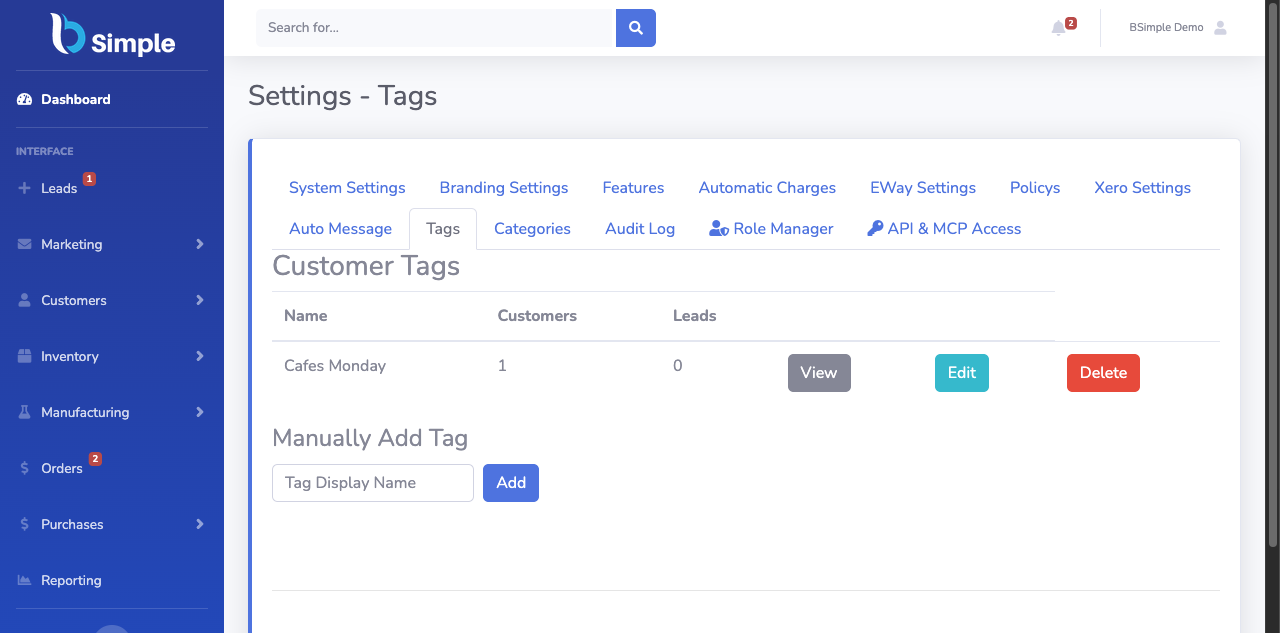
Those rules are changed in settings by the people who run the operation, and the audit trail shows who changed what. That is the honest 90% of what small and mid-sized businesses need from "rules management" — built in, from $180/month AUD, with the trial to test it on your own products. If you later have genuinely complex, cross-system decision logic, a BRMS is the right specialised tool, and BSimple's REST API is how an external rule engine would connect.

Frequently Asked Questions
What is a business rule management system in plain terms?
A system that stores the "if this, then that" decisions of a business outside application code, so they can be changed and audited without a development release. Think of it as a managed home for decision logic plus the engine that applies it.
Is BSimple a BRMS?
No. BSimple is operations software — inventory, orders, purchasing, invoicing on one record — with the common business rules built in: reorder triggers, approval gates, stock guardrails. It does not externalize decision logic into a separate rule repository.
Does a small business need a BRMS?
Almost never. The case rests on rules that change weekly, span several systems and demand audit proof. If you cannot name those decisions, the operational system with rules built in is the better buy — and cheaper by an order of magnitude.
How are rules changed in BSimple?
Through settings, by your staff: reorder and par levels, approval steps, guardrails. Changes land on the audit trail under the account that made them, so "who changed this and when" has an answer.
Can a BRMS connect to BSimple?
If one day you need external decision logic, the public REST API with keys and scopes is the designed connection point — read projections of stock, orders and purchasing that an external engine can evaluate.
BSimple