
Guide / risk
Business risk management software
The honest answer: dedicated risk management software means risk registers, GRC platforms and compliance tracking — which BSimple is not. Where operational systems genuinely reduce business risk at the source, and where a GRC tool is the right purchase instead.
The key facts
- The category, defined: risk registers, GRC (governance-risk-compliance) platforms, incident tracking, audit workflows — software whose subject is risk itself.
- BSimple's boundary: not a GRC product, no risk registers or compliance modules — claimed plainly rather than half-pretended.
- The overlap that is real: operational failures are business risks, and systems with accurate records, guardrails and audit trails remove whole classes of them.
- The pairing that works: a GRC tool to catalogue and monitor risks; an operations system to make the operational ones structurally unlikely.
- 01The key facts
- 02What risk management software actually does
- 03Where operational software removes risk at the source
- 04BSimple's boundary, stated plainly
What risk management software actually does
The dedicated category is built around the risk lifecycle: a register where risks are named, scored and owned; controls mapped against each risk; incident and near-miss reporting; workflow for reviews, approvals and remediation; and reporting that lets a board or auditor see the posture in one view. Enterprises buy these platforms because regulatory frameworks demand evidence — policies, attestations, audit trails of decisions about risk.
For a small or mid-sized business, the honest question is whether that layer earns its cost yet. A spreadsheet register reviewed quarterly covers a surprising amount of ground. What no register covers is the risks that live in operations — which is where the second meaning of this search comes in.
Where operational software removes risk at the source
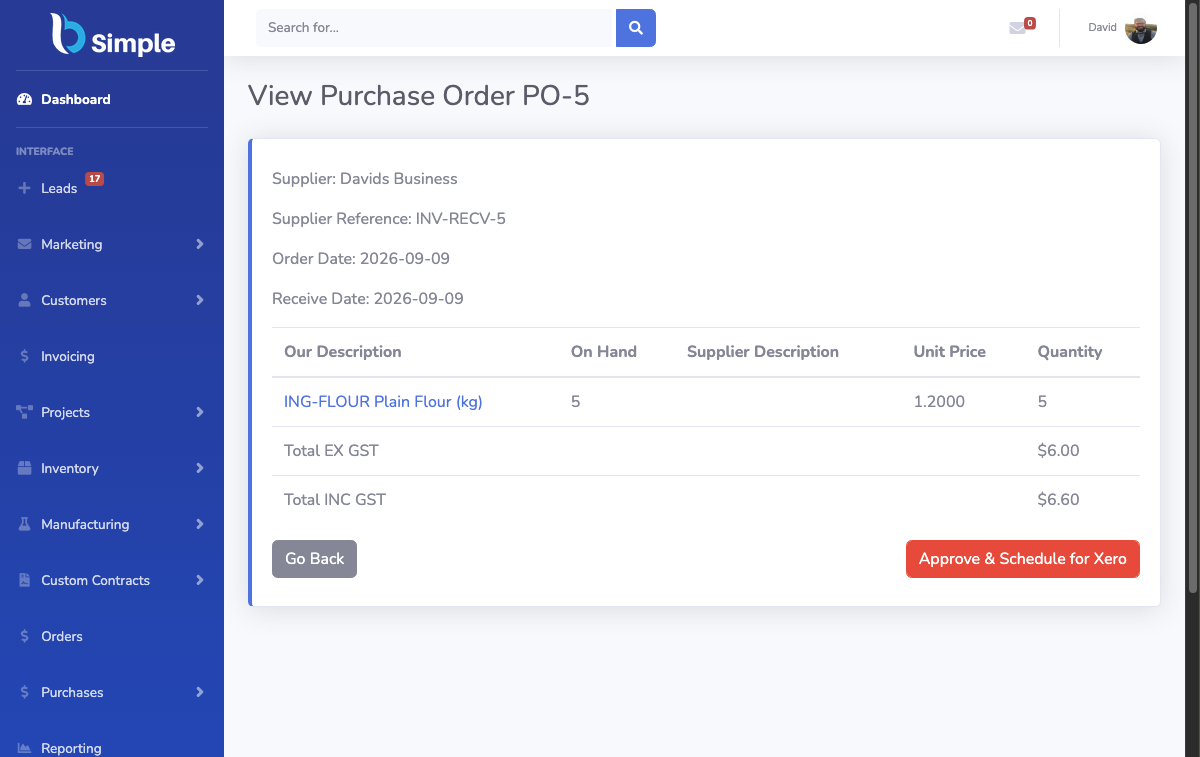
Most risks that actually hurt a small wholesale, manufacturing or distribution business are operational, and they are not managed in a register — they are designed away (or not) in the systems that run the day. Stock loss and shrinkage: an accurate, movement-based record with regular cycle counts makes drift visible in days, not at year-end. Selling what does not exist: guardrails and reservations stop double-promising before the customer call. Supplier overpayment: price-variance flags between order and invoice catch errors at reconciliation time. Recall and traceability exposure: batch tracking answers "which lots are affected" in minutes — the traceability layer is the difference between a contained incident and a crisis. Key-person risk: one record instead of one person's spreadsheet memory.
None of that is a risk module; it is what an accurate operational record is. This is the sense in which business management software is risk software — by construction rather than by module. The continuity side carries its own system requirements, worth reading before an audit forces the question.
BSimple's boundary, stated plainly
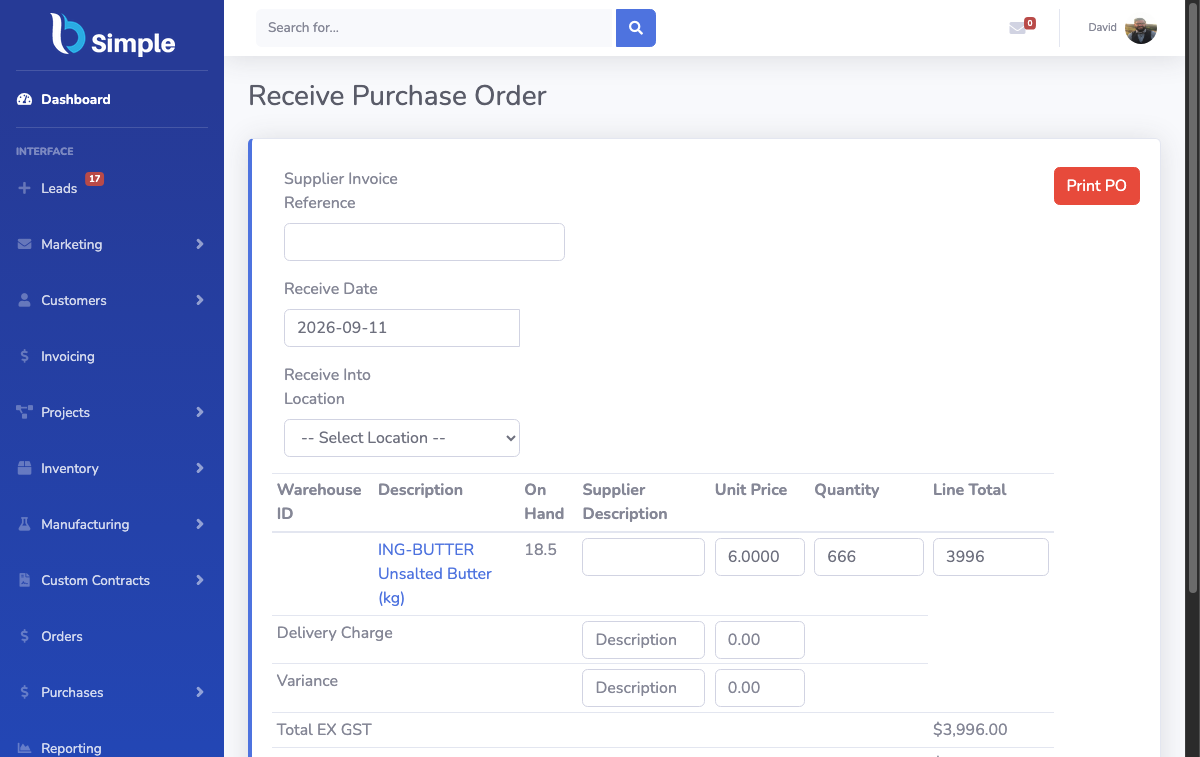
We build BSimple, so weigh that: it is operations software — inventory, orders, purchasing and invoicing on one record for wholesale, manufacturing, distribution and trade businesses — and it is not risk management software in the GRC sense. There is no risk register, no compliance-attestation workflow, no incident-tracking module; a business that needs formal GRC should buy GRC software, and treat BSimple as the accurate record that keeps operational risk off the register. What it does provide: an audit trail on every stock movement, negative-inventory guardrails, batch traceability with use-by dates, price-variance flags, multi-location visibility, and payment-status mirroring from the accounting system — the wider business-management context covers the continuity side of the same question.
The pairing works because the two categories answer different questions: the GRC tool asks "what could hurt us and who owns it?"; the operations system makes "our stock figure lied" and "we double-sold the last unit" structurally unlikely. From $180/month AUD, with the trial as the full product — the risk-reduction claims above are testable on your own data, which is the only way they should be believed.
Frequently Asked Questions
What is business risk management software?
Software whose subject is risk itself: risk registers with scoring and ownership, control mapping, incident reporting, compliance workflows and board-level reporting — usually called GRC platforms. It catalogues and monitors risk; it does not run your operations.
Is BSimple risk management software?
Not in the GRC sense — no risk register, no compliance modules, and we will not pretend otherwise. It is operations software whose accurate, audited record removes operational risks at the source: stock drift, double-selling, overpayment, untraceable batches.
Can software reduce business risk without a risk register?
Yes — the operational risks that actually cost small businesses money are mostly designed away (or not) in the systems that run the day. An accurate movement record with guardrails and traceability eliminates whole classes of incidents that a register would merely monitor.
What risks does BSimple actually address?
Inventory inaccuracy, overselling, unexplained shrinkage, supplier overpayment, recall blindness, and key-person dependence on private spreadsheets. Each is addressed structurally — audit trails, guardrails, batch search, variance flags — rather than by policy documents.
Should a small business buy GRC software?
Only when a framework, insurer or board demands formal evidence; before that, a maintained register plus an accurate operational record covers the real exposure. See the continuity-software comparison for the adjacent question, and the trial to test the operational half on real data.

BSimple